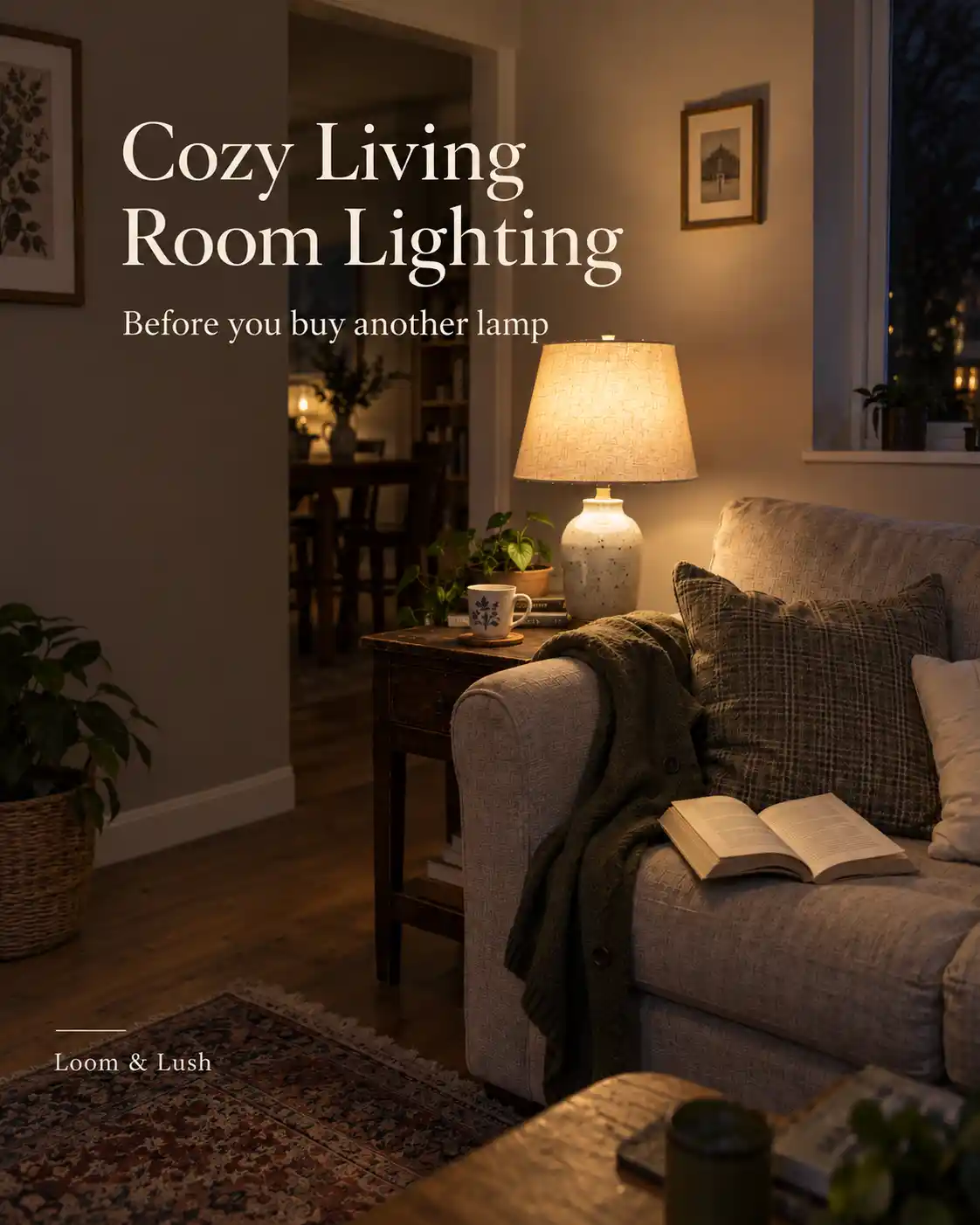
Your living room might look perfectly fine during the day, but once evening comes and you switch on the ceiling light, it can suddenly feel a little empty or less inviting. That doesn’t necessarily mean there’s anything wrong with the room or the things in it. The lighting has simply changed. Cozy living room lighting starts with figuring out what’s uncomfortable about the light you already have.
So before buying new things to change the room, try adjusting the lighting in the evening first. See how the space feels after that, and then decide whether it still needs more decorating.
Start Where You Actually Sit
Tonight, turn on the lights you normally use in your living room and sit where you usually relax, whether that’s on the sofa or in a chair. A room that looks great from the doorway can feel very different once you’re actually sitting in it.
From your usual spot, notice a few things Is a bulb shining directly into your eyes? Is a lamp creating glare on the TV? Or is the area where you like to read too dark?
Turn on any table or floor lamps you already have, then switch off the ceiling light. If the overhead light is the only light you have, just leave it on. To get a better sense of how the lighting actually feels, don’t rely on photos from your phone, since phone cameras often brighten dark spaces automatically. Instead, sit in the same spot for about ten minutes and notice how the room feels with the different lighting.
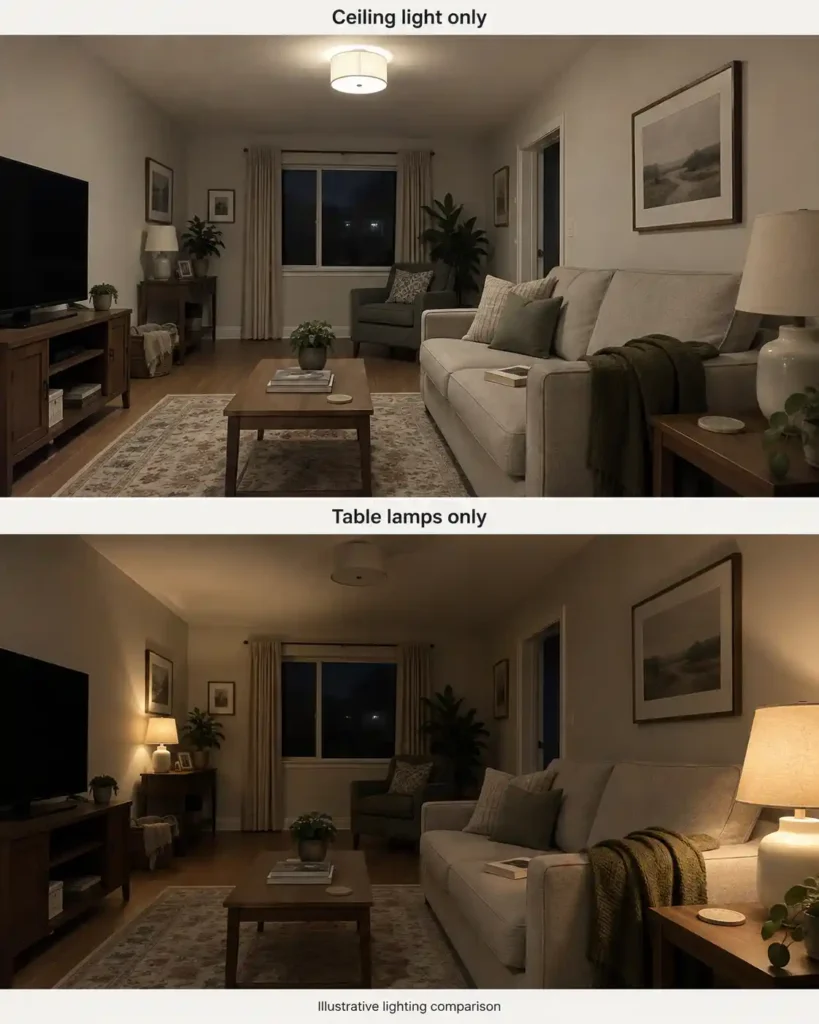
Would you want to spend the evening here?
There’s no rule that says you have to keep the main overhead light turned off. It can be useful when you’re cleaning, looking for something, or doing homework. But in the evening, you don’t have to rely on that one light for everything you do.
Try Cozy Living Room Lighting With a Lamp You Already Own
Try moving a bedroom or desk lamp next to the sofa. Don’t worry too much about how it looks for now the idea is simply to find out whether you need more light in that spot. Unplug the lamp before moving it, and make sure the cord is safely out of the way.
Then sit there and do something you normally would, like reading a book or watching TV. You’ll quickly get a sense of whether the lighting feels comfortable.
Layered lighting simply means using different lights for different purposes. General lighting helps you move around the room, while a lamp can give you the focused light you need for reading. You can use both together when needed.
And you don’t need to light up every dark corner. Start with the places you actually use, such as your favorite seats and the areas you walk through. If those spaces feel comfortable, it’s perfectly fine to leave unused corners a little darker.
Check the Bulb Before You Blame the Room
If moving the lamp doesn’t make the room feel any better, the problem might be the color of the light, how bright it is, or the direction it’s shining.
When the colour feels wrong
Kelvin (K) tells you the color temperature of a light. Lower Kelvin numbers produce a warmer, more yellow-toned light, while higher numbers produce a cooler, whiter light. For a calm, comfortable feel at home, 2700K to 3000K is a good range to try.
It isn’t a rule for all. If that looks too yellow to you, try something you prefer. Test one suitable bulb before replacing everything.
When it’s too bright or not bright enough
Look at lumens, not watts when you are choosing brightness. With LED bulbs, lumens tell you how much light the bulb actually produces. Changing the color temperature doesn’t necessarily change the brightness. If the light is too bright, it can feel harsh on your eyes. If it’s too dim, reading can become difficult.
Make sure your LED bulb is dimmable and compatible with your dimmer switch. Even if a bulb is labeled “dimmable,” it may not work smoothly with every type of dimmer.
When the bulb is right in your eyes
If you can see the bulb directly from where you’re sitting, changing the light color may not solve the problem. Instead try using a shade that covers the bulb or moving the lamp so the light isn’t shining directly into your eyes. And even if the room feels bright enough, make sure the light is positioned so your own shadow doesn’t fall across the page while you’re reading.
Make It Comfortable to Live With
If you have to lean forward just to read comfortably, the lighting probably isn’t working well for that spot. Try to keep the bulb out of your direct line of sight while making sure enough light reaches the page. and If a lamp is creating glare on the TV, simply moving it a little may be enough to fix the problem.
Tasks like cooking and cleaning usually need brighter light. Once you’re finished, you can lower the lighting around the dining area. If the same room also serves as your workspace, close your laptop when you’re done, switch off the desk lamp, and turn on a lamp beside the sofa instead. The furniture hasn’t changed, but the shift in lighting can make the room feel calmer and more relaxing.
Give It Three Ordinary Evenings
To find out whether the lighting changes actually work for you, try them for three evenings.
On the first night, notice how the lighting feels while you’re watching TV. On the second, try reading. On the third, pay attention to it during dinner. Ask yourself whether you can see everything clearly, whether any light is shining into your eyes, or whether certain areas still feel too dark.
When making adjustments, change just one thing at a time. If you keep finding yourself turning the ceiling light back on, that may be a sign that the room needs a better combination of lights.
Now Decide Whether Anything Is Missing
By now, you should have a clearer idea of what isn’t working in the room. Maybe the light color feels too cool, the bulb is directly in your line of sight when you sit down, or the lamp is simply on the wrong side of the sofa.
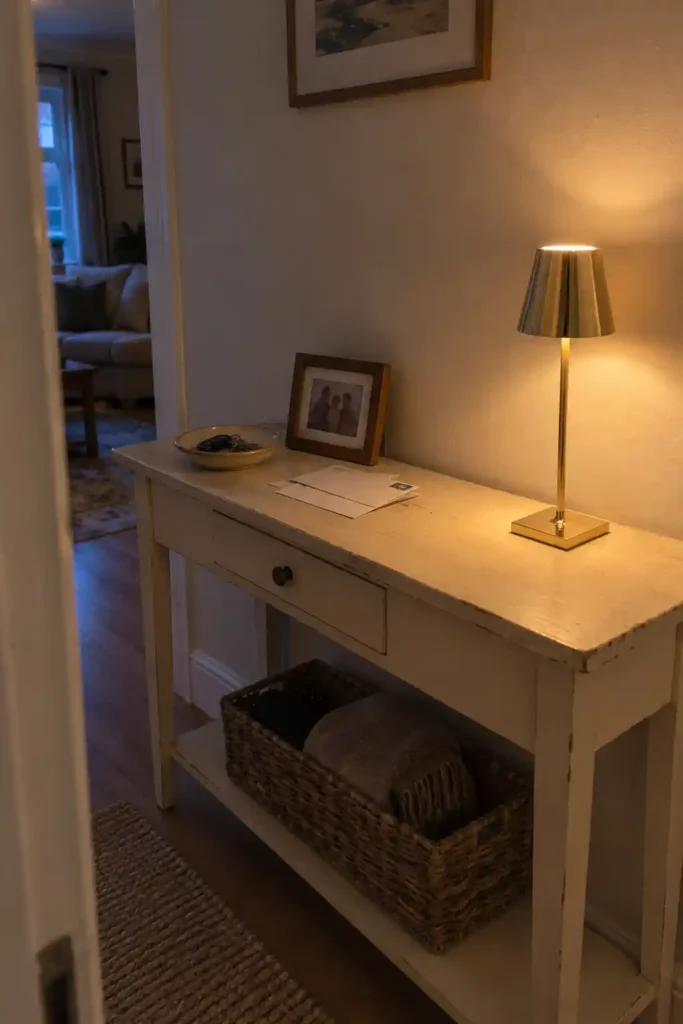
If there’s no outlet where you need a lamp, a cordless table lamp can be an option—just check the battery life and brightness before choosing one. Or, if the lamp you borrowed works well in that spot, you may already have found your solution. Without changing anything else in the room, better lighting can make it feel much more comfortable to sit down, relax, and read a book.
Written for LoomAndLush — practical home, style and lifestyle ideas for everyday living.