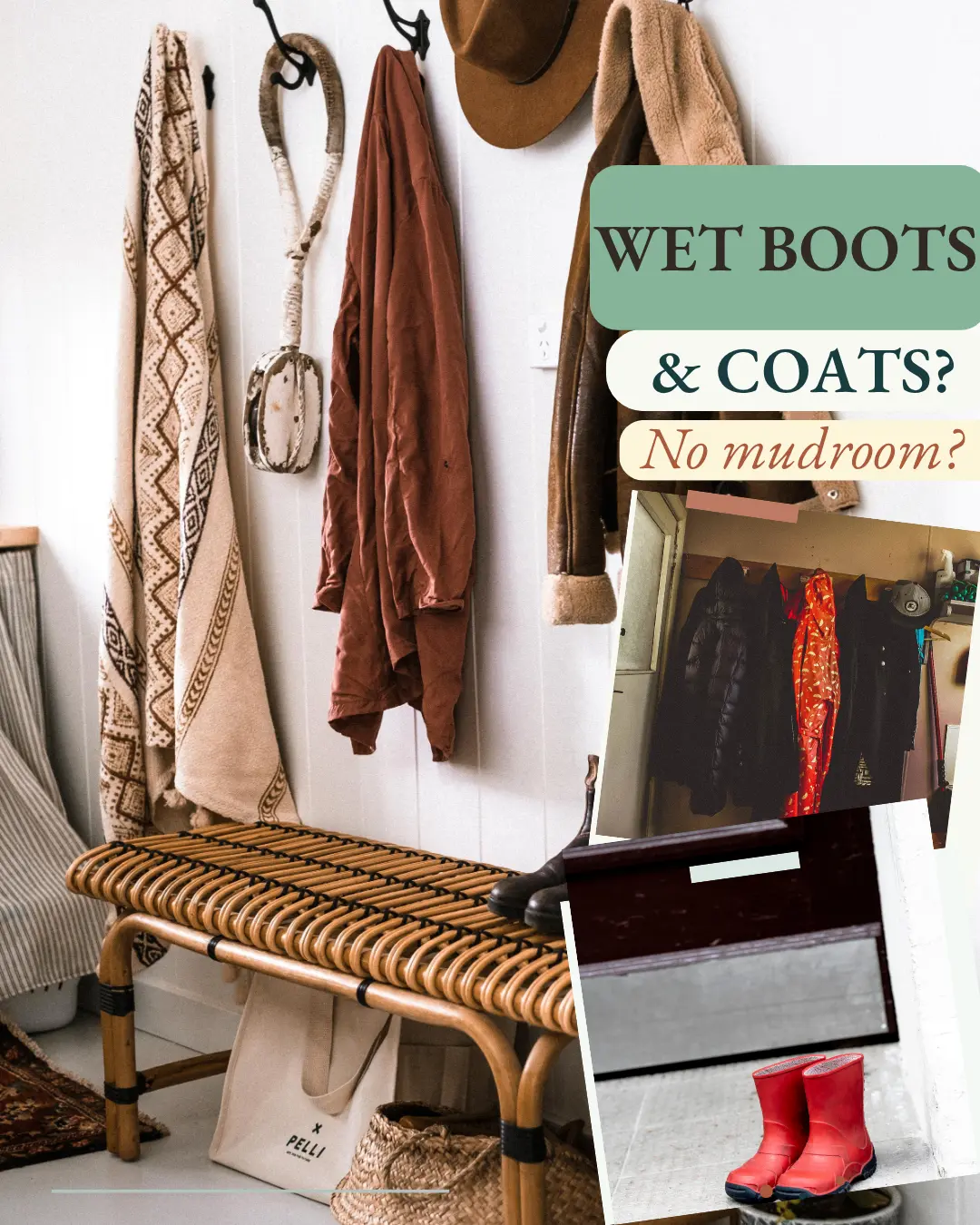
You get home, take off one snowy boot, and realize there’s nowhere good to put the other one. The doormat is already wet, your coat is dripping, and the front door still needs room to open.
A mudroom would be nice. So would an extra few feet of hallway. But when your front door opens straight into the living room, you’re working with whatever space you’ve got.
The answer isn’t necessarily another shoe rack or a bigger basket. Wet boots and coats need somewhere to go while they’re drying, and that isn’t always where they’ll live afterward. The first job is dealing with the water. Then you can worry about putting everything away.
Table of Contents : wet boots and coats in winter
Give Melting Snow Somewhere to Go
Snow doesn’t stay on boots for long once you’re indoors. It melts around the soles, soaks the mat, and leaves you trying not to step in a puddle with clean socks. Rain-soaked shoes can make a similar mess, even when there’s no snow in sight.
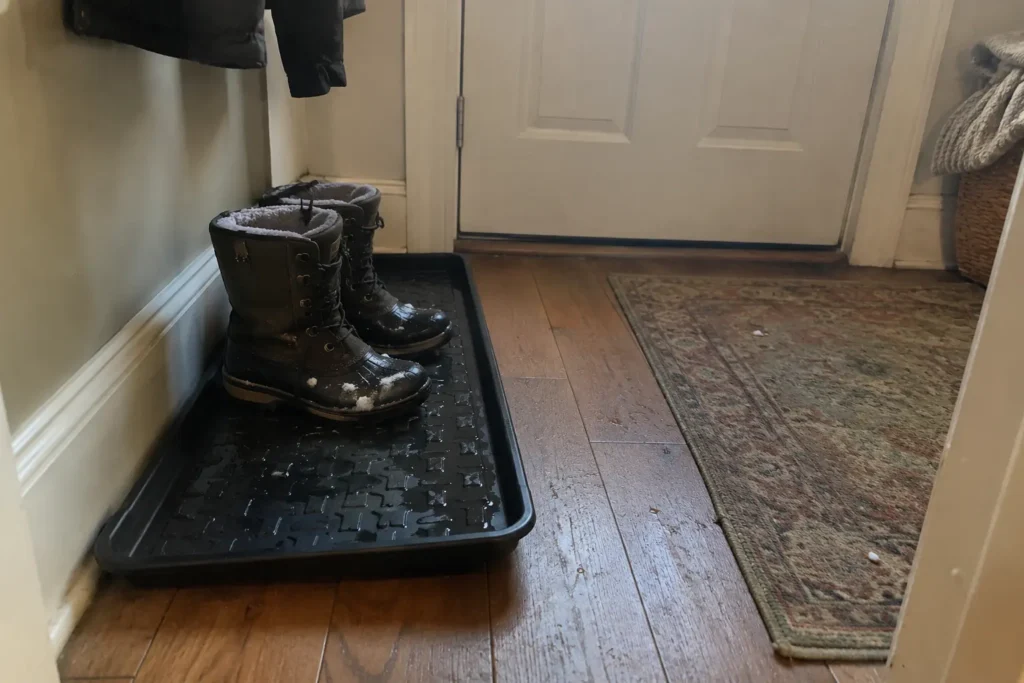
A boot tray with raised edges catches that water. It should hold the whole pair and sit flat without sliding. A sturdy, watertight container you already own can do the job too, as long as the boots fit inside and it doesn’t block the doorway.
A washable mat is fine for muddy soles or a little rain, but a soaked mat can leave the floor beneath it wet. Keep a towel nearby for small spills, not as the only barrier between melting snow and carpet. Empty the tray when water builds up, and lift it occasionally to check the floor underneath.
Check your flooring before putting down a new mat, too. Karndean notes that some synthetic rubber and PVC backings can discolour its vinyl flooring. What works on tile won’t necessarily suit every wood or vinyl floor.
When the Door Takes Up All the Space
This is where the usual entryway advice gets frustrating. A boot tray sounds simple until the only spot for it is exactly where the door needs to swing.
Before buying anything, move the dry shoes and bags that have settled by the entrance. That might leave enough room for a small water-catching spot. Keep the door’s path and the walking space clear; a tray you have to step over every time isn’t helping.
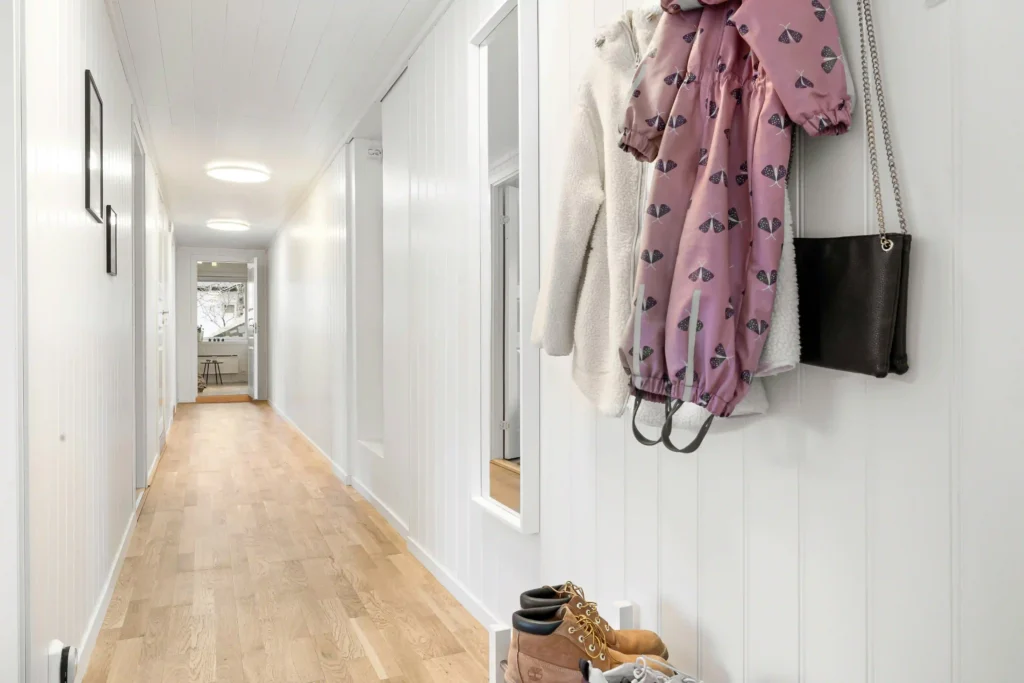
If the front door opens onto a hard floor, you may be able to put the boots just beyond the swing of the door, then move them somewhere less busy once they’ve stopped dripping. Don’t leave wet footwear where people will walk through the water.
A carpeted hallway is harder. If you can safely knock loose snow off your boots before coming inside, do that first. Then take them off at the entrance and put them in a stable waterproof tub or tray within reach. If there’s a bathroom or utility room with a washable floor nearby, carry the container there rather than taking dripping boots across the carpet. Make sure it’s easy to carry without spilling.
If there’s no room to set down a tub at the doorway, blot the wet soles with a towel before moving each boot, and wipe up any drips straight away. That’s a stopgap, not reliable protection for a carpet that gets soaked every day. Sometimes a properly sized water-catching tray is something you really do need, and it has to fit somewhere safe. No clever storage trick can make the hallway wider.
Boots Can Look Dry and Still Be Damp
A tray keeps the puddle off the floor. It doesn’t dry the lining inside your boots. You can pick up a pair that looks perfectly dry outside and still feel dampness around the footbed.
Check inside before putting them away. If the insoles come out, let them dry separately. Give the boots space in a room where air can move around them; don’t pack them together in a closed cabinet. REI’s boot-care advice recommends normal room temperatures and says a fan can help with drying.
Don’t put boots against a radiator or beside a space heater to speed things up. High heat can damage leather and adhesives. Follow the instructions for your particular boots, especially if they have special linings or waterproof materials. Some pairs simply won’t dry overnight.
The Coat Has to Go Somewhere, Too
A wet coat thrown over the back of a chair is easy to forget until the chair feels damp. Hanging it isn’t much better if it drips onto carpet or hangs across the narrowest part of the hallway.
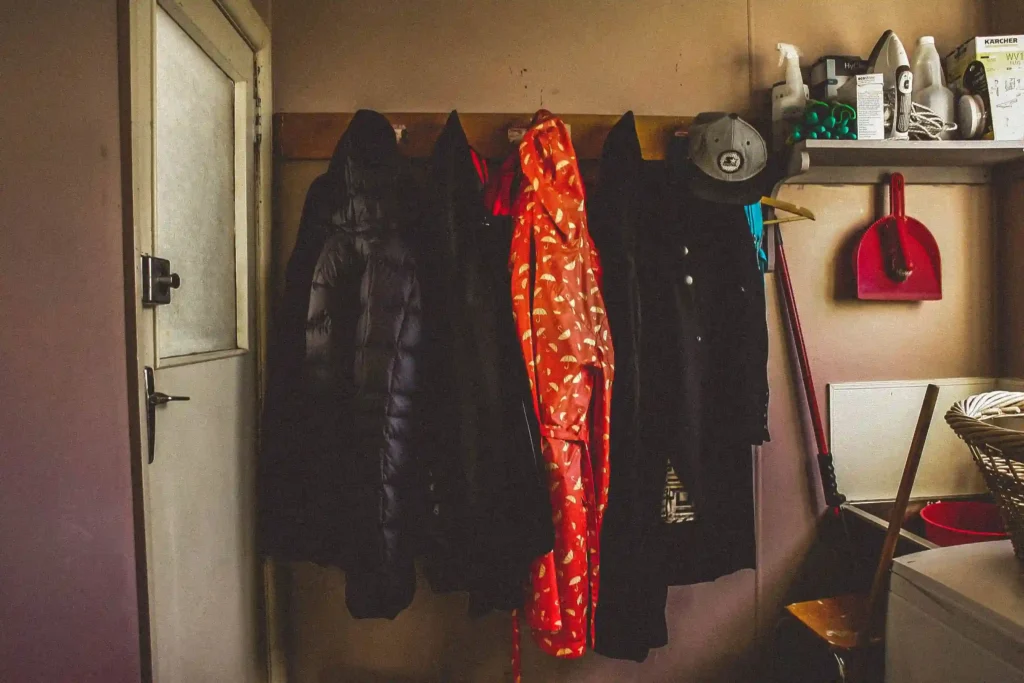
Look for a sturdy hanger and a place with a little space around it. That might be an existing clothes rail in another room rather than the hooks by the door. Leave room between the coat and other clothes, and check where the water will land. For light drips, a towel on a washable floor may be enough, but pick it up when it’s wet and dry the floor underneath. If the coat is dripping steadily, catch the water in a watertight tray or let it drip into a bath or shower area before moving it to a proper drying spot. Don’t leave a wet towel sitting on carpet.
A bathroom can be useful if there’s a strong enough hanging point and the room has ventilation. If it already feels damp long after someone showers, it’s probably not the first place to choose. And don’t hang a heavy wet coat on a flimsy rail just because it’s there.
The fabric makes a difference. Woolmark recommends shaped or padded hangers for woven wool garments and drying wet wool away from direct heat. A down jacket or technical raincoat may need different care, especially if it’s soaked through, so check its label rather than guessing. Keep coats away from portable heaters; the London Fire Brigade warns against drying clothes on them.
If coats are still damp the next day and the room feels humid or smells musty, look at both the airflow and the moisture in the room. Our guide to drying clothes indoors faster explains what to look at when air isn’t moving or moisture is hanging around.
Put the Dry Things Away, Then Look at What’s Left
Once the boots are dry inside, they can go back to their usual spot. A slim cabinet may help with everyday shoe clutter—our HOKYHOKY rattan shoe cabinet review looks at one option for narrow entrances—but it’s storage for dry footwear, not a place to dry wet boots.
If the entry still turns into a mess every evening, notice what actually goes wrong. Is the tray overflowing? Are coats packed so tightly they stay damp? Are dry shoes taking up the only safe spot for the wet ones? Change that part before adding another basket or rack.
You don’t need a picture-perfect mudroom. You need somewhere for the water to land, a way for boots and coats to dry, and a front door you can still open without moving half the hallway.