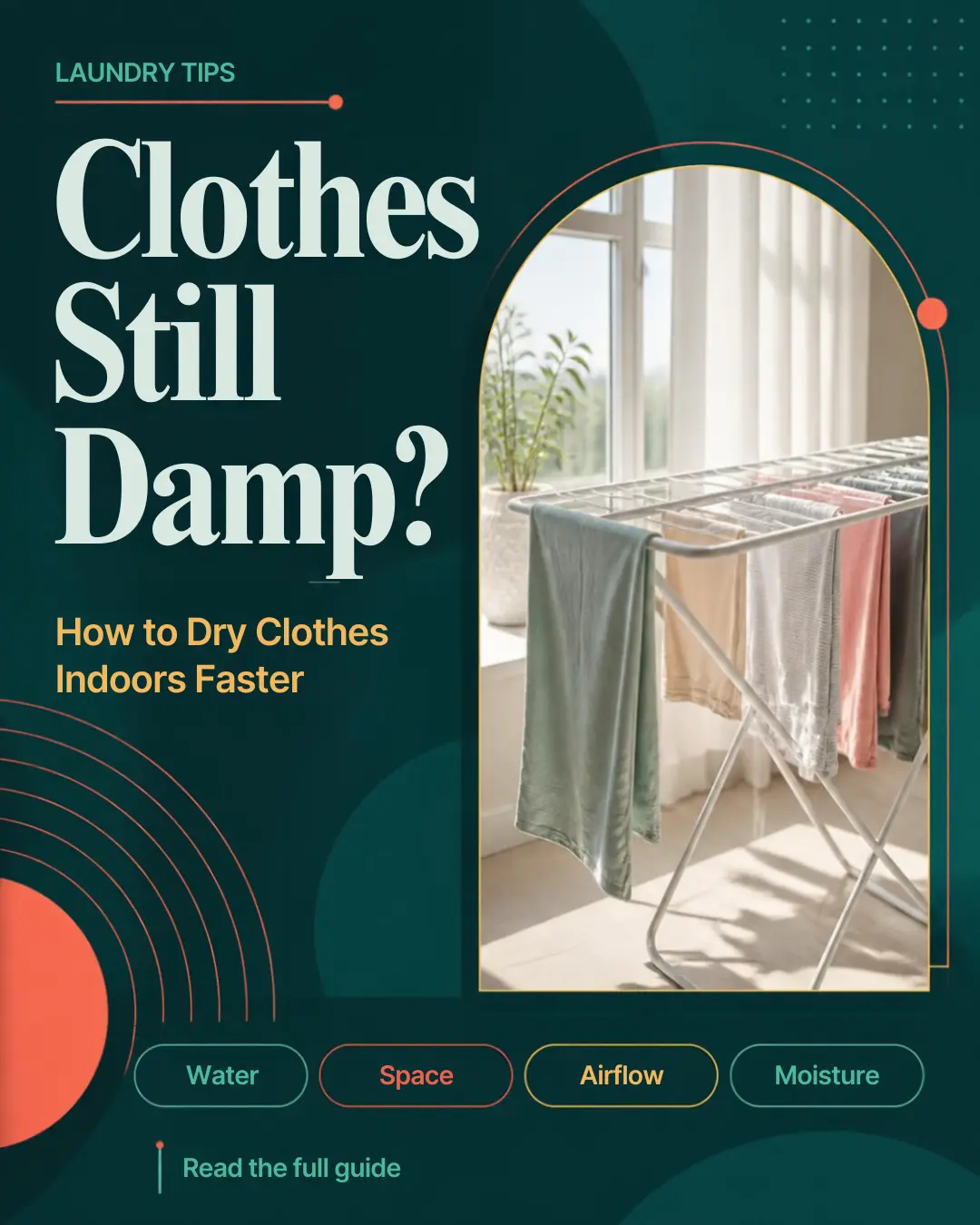
indoor clothes drying, It’s frustrating when clothes you washed yesterday still aren’t fully dry the next morning. Hoodie cuffs may still feel damp, towels may not smell quite fresh, and the waistband of your jeans can still feel cold. If you’re trying to work out how to dry clothes indoors faster, the first step is finding out what is actually slowing the load down.
Moving the rack closer to a radiator, opening a window, or thinking about a dehumidifier all make sense. But slow drying usually doesn’t come down to just one thing.
Start with four things: water, space, airflow, and room moisture. Are the clothes coming out of the washer too wet? Are they packed too closely on the rack? and Is air moving around them?. Is moisture able to leave the room? Fix the main thing slowing your load down first.
Table of Contents
credits : thisgirlcanorganise
How to Dry Clothes Indoors Faster : First, Work Out What’s Actually Slowing the Load
Look at which clothes are still wet. That usually gives you a clue about where the problem is.
- T-shirts are dry, but towels, jeans, and hoodies are still wet: Thick areas like waistbands, cuffs, hoods, and folds are taking longer to dry.
- drying slowly: Check water, space, airflow, and room moisture one by one.
- Clothes are drying slowly and the windows are wet too: There may be too much moisture in the room.
- Clothes already smell stale when they come out of the washer: The problem is more likely on the washing side than with the drying rack.
- You need one item ready by tomorrow: Focus on drying that piece first.
If the real problem is an overcrowded rack, buying a dehumidifier won’t fix that. Start by working out what is actually slowing the drying down.
Water : Start With Less of It – indoor clothes drying
If a sweatshirt feels unusually heavy when you take it out of the washer, it’s probably still holding a lot of water. and If the care label allows it, give towels, denim, and cotton sweatshirts an extra spin. For delicates, wool, and other more sensitive fabrics, follow the care label instead.
Don’t leave wet clothes sitting in the drum or laundry basket for too long after the wash finishes. Hang them up as soon as you can, and open out sleeves and trouser legs rather than leaving them folded or bunched up. If you can’t give an item an extra spin, give it more space and airflow while it dries.
Space: A Rack Isn’t a Storage Shelf – indoor clothes drying
Packing clothes tightly onto the rack will only slow things down. Leave a little space between items. Spread towels out properly, keep trouser legs apart, and use hangers for shirts if you have room.
If the rack is too small for the whole load, don’t force everything onto it at once. Dry the things you need first, then add the rest. Take lighter clothes off as soon as they’re dry. That gives heavier pieces like towels and jeans more room.
Air and Room : Don’t Let the Moisture Just Sit There
Warmth helps, but it isn’t enough on its own. If moisture leaves the clothes and stays trapped in the room, drying will still take longer. Keep the rack slightly away from the wall and somewhere air can move around it. If the room feels still, a fan or extractor fan can help.
Opening a window may help depending on the weather. Wet windows in the morning or a stuffy room can be signs that moisture is building up. A hygrometer makes this easier to check. The US EPA recommends keeping indoor humidity below 60%, ideally between 30% and 50%.
Shower steam, cooking, or another wet load drying in the same room can add even more moisture. Try to get some airflow going as soon as you hang the clothes rather than waiting until they’ve already been sitting there for hours.
Towels, Jeans, Hoodies and Sweaters Aren’t the Same for indoor clothes drying
T-shirts may be dry while the waistband of your jeans or the cuffs of a hoodie are still damp. Thicker areas usually need a bit more attention.
- Towels: The folded parts stay wet longer. Spread them out as much as you can and turn them once while they’re drying.
- Jeans: Keep the waistband open and the legs apart. Before folding them, check the pockets and seams too.
- Hoodies: Hoods, cuffs, and pockets hold more water. Open the hood, separate the sleeves, and change the position once partway through drying.
- Sweaters: Wool and knits can stretch if you hang them. Follow the care label and dry them flat when needed.
Give thicker areas more exposure to the air, but don’t pull or stretch the fabric just to make it dry faster. check for more details
credits : bostikuk
If It Smells Damp, Notice Where the Smell Starts – indoor clothes drying
Don’t assume a musty smell always means the room is too damp. Notice when the smell first appears.
- It smells when it comes out of the washer: The clothes may have sat in the drum too long, the machine may need cleaning, or you may be using too much detergent.
- It starts smelling while it dries: Drying is probably too slow. Check the spacing, airflow, and room moisture.
- It smells after folding: Part of the item may still be damp. Check cuffs, the middle of towels, and thick seams. Don’t put slightly damp clothes into a drawer or closet. Fix the cause of the smell rather than trying to cover it up.
Need It Dry Tomorrow Morning?
If you need a work shirt or school sweater ready for tomorrow, don’t try to speed up the whole load. Focus on that one item.
- Give it an extra spin if the care label allows.
- Put it on the part of the rack with the most space and airflow, ideally on its own.
- After a few hours, change its position and open out thicker areas like cuffs and pockets.
- Before bed, check the seams, cuffs, pockets, and waistband to make sure they’re fully dry.
The rest of the load can finish later. For one urgent item, less water, more space, and better airflow usually help more than adding extra heat.
Do You Actually Need a Fan, Dehumidifier, Heated Airer or Dryer?
Choose a tool based on what’s actually slowing the drying down.
- Fan : Useful when there isn’t much air moving around the rack.
- Dehumidifier : Can help if the room stays humid or the windows often fog up.
- Heated airer: Adds warmth for smaller loads, but the moisture still needs somewhere to go.
- Tumble dryer : A faster option for larger loads.
- You may not need to buy anything : If the rack is overcrowded or the clothes are coming out of the washer very wet, fix that first.
Don’t drape clothes over a portable heater. Keep fabric away from direct heat sources. If wet windows, musty smells, or mould keep coming back, the issue may be bigger than the laundry itself. Check the room’s moisture and ventilation too.
if you want also know a How to Layer Bedding for Cooler Nights Without Getting Too Hot
For the next load, focus on four things: get more water out first, give clothes enough space, keep air moving, and let moisture leave the room. If that solves the problem, you may not need another appliance.