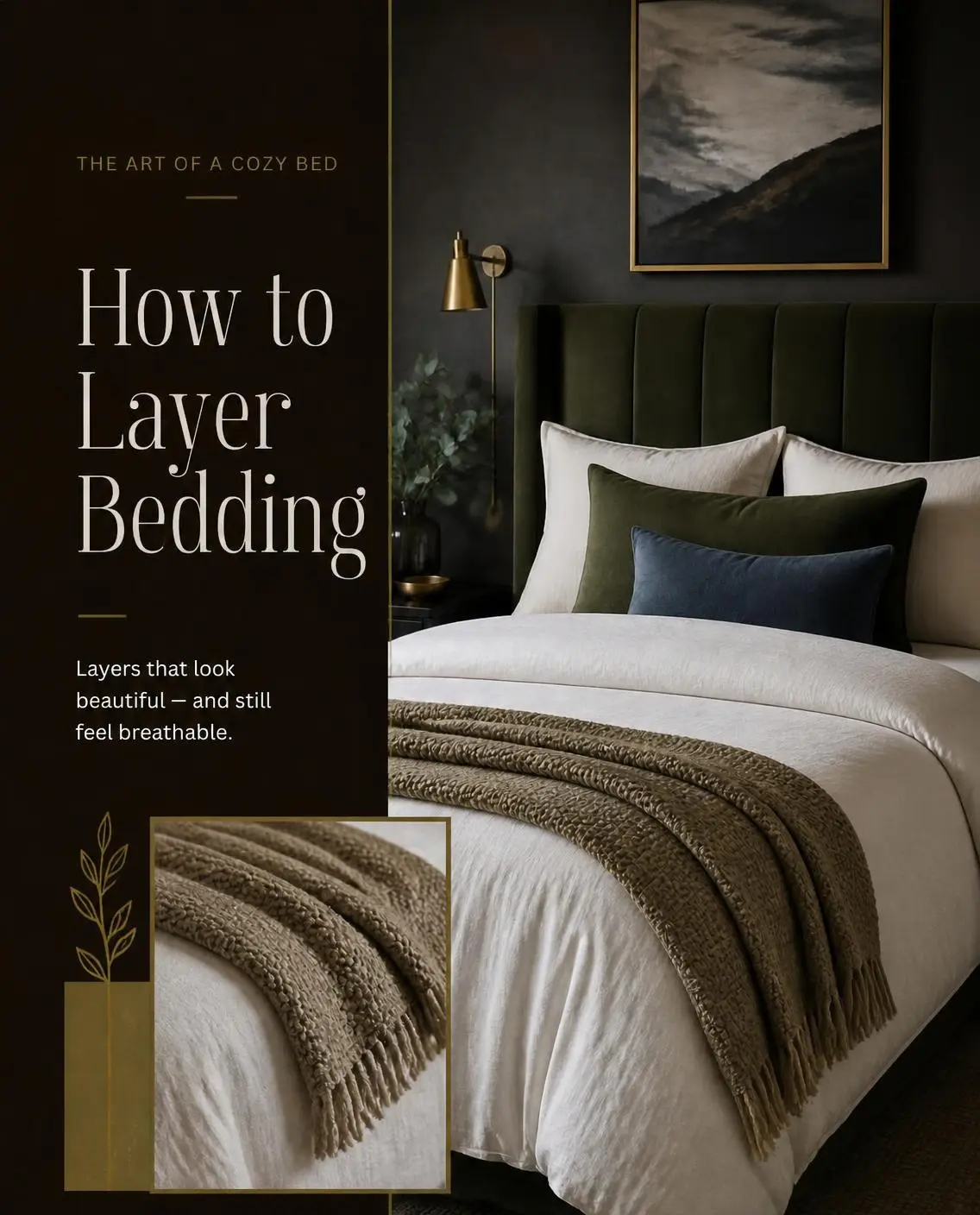
When the bedroom feels cold, you pull the duvet up. A little later you’re too warm, so you push it away, then reach for it again when you get cold. The blanket at the end of the bed somehow ends up on the floor too. you think how to layer bedding?
Layering your bedding can make this easier. You want enough warmth to sleep comfortably, with an extra layer you can move aside when you get too warm.
Before buying a thicker duvet, try changing how you layer what’s already on your bed. That may be enough on those in-between nights when it’s getting colder outside but your bedroom isn’t that cold yet.
Start with what feels uncomfortable
Are you cold as soon as you get into bed, or do you stay cold through the night? Do you wake up because you’ve gotten too warm? And if you’re too warm, is your partner still cold?
Paying attention to when it happens can help you work out what needs changing. Room temperature, what you sleep in, and your bedding all play a part. The same setup may not work in a heated apartment and a bedroom that stays cold at night.
If the duvet starts feeling too warm soon after you get under it, adding another blanket on top probably won’t help. Try a lighter duvet instead, and keep an extra blanket nearby for when you do feel cold.
credits : louiburke
How to layer bedding without piling everything on
You don’t need a sheet, blanket, quilt, duvet, and throw all on the bed at once. Start with whatever already feels comfortable, then add another layer if you need more warmth.
Keep the Sheets You Already Like
A fitted sheet goes over the mattress. If you use a top sheet, it sits between you and your duvet or blanket. You don’t have to use one, so stick with whatever feels comfortable to you.
If you already like your sheets, leave them as they are. Changing your sheets, sleepwear, and duvet all at once makes it hard to tell which change actually made a difference.
Choose One Main Layer
Pick a quilt, blanket, comforter, or duvet that feels comfortable enough to sleep under through the night. With a duvet, the filled part inside the cover is called a duvet insert. A comforter is usually used on its own without a separate cover.
If you keep pushing your winter duvet away because you get too warm at night, it may simply be too warm for your bedroom right now.
Keep an Extra Layer Easy to Remove
If you need a little more warmth, add a blanket you already have. When you get too warm, you can easily move it aside.
A quilt can work as an extra layer too. Don’t assume a quilt will always feel lighter or a blanket will always feel warmer just because of what it’s called. Go by how it actually feels when you sleep under it.
Make the extra layer easy to move when you’re half asleep
If you’re using a blanket with a duvet, keep the blanket on top. That makes it easy to take off. Don’t tuck it tightly under the mattress if you want to move it during the night.
If your feet get cold, keep the blanket over the lower part of the bed. If it feels too warm or heavy when folded, spread it out instead. Keep a chair or bench nearby for the blanket if you take it off during the night.
and If the blanket keeps sliding off, check its size and position before buying a warmer one. If it’s a small throw, spread it out fully. Or use a larger blanket you already have.
Change one layer at a time and see how it feels.
Three setups to try with what you own
If You Feel Cold at First, Then Too Warm
Use a lighter duvet with an extra blanket on top. When you get warm, move the blanket aside. If you’re still too warm, try the duvet on its own. Your sleepwear may be adding more warmth than you realise.
You stay cold for much of the night
Add a blanket over your usual duvet. If your shoulders or feet keep getting uncovered when you turn over, use a larger blanket.
Still cold? Check the room temperature or consider a warmer duvet instead of adding more layers.
If You and Your Partner Sleep at Different Temperatures
Put an extra blanket on the colder person’s side of the bed. If you need very different levels of warmth, separate blankets or duvets may work better. Each person can then use what feels comfortable.
Keep the bed inviting without adding bedtime chores
A textured blanket over a plain duvet cover can make the bed look more put together. It’s even better if you’ll actually use it when you need it. Pick a color that’s already in the room and fold the blanket loosely so it’s easy to pull over you.
Keep decorative pillows to ones you don’t mind moving every day. If they always end up on the bedroom chair, see our guide to small things that can make a clean room look messy
credits : alexandra__harper
What to check before buying another layer
Once you’ve looked at the bedding you already have, you’ll have a better idea of what’s missing. Maybe your blanket is too small or your duvet is too warm. Then you’ll know what to look for if you buy something new. We take the same approach in our seasonal reset: work out what you actually need first.
- Warmth: According to the John Lewis duvet guide, a higher tog means more warmth. If it says “light” or “all-season,” check the brand’s guide.
- Materials: Check both the cover and filling. A cotton cover doesn’t mean the filling is cotton.
- Size: Don’t go by “king” alone. Check the actual measurements.
- Care: Check how it should be washed, whether it fits in your machine, and where you’ll keep it when you’re not using it.
Also check what “all-season” means on the listing. It can vary by brand.
A flexible comforter for changing nights
If you want to change your main bedding, the Bedsure GentleSoft 2-in-1 Comforter Set with Detachable Blanket is one option. It comes with a comforter and a detachable fleece blanket. You can use them separately or together.
Use one layer when that’s enough, then add the second when you want more warmth. If you usually take the blanket off during the night, leaving it detached will make that easier.
We haven’t tested this set ourselves. The detachable design may be useful, but how warm it feels will depend on your room and the rest of your bedding.
Before ordering, check the size, fabric, washing instructions, and what’s included in the set. If your current duvet is still working well and you already have an extra blanket, try those together first.
Try one change tonight
Before you make the bed, think about what bothered you last night. If the duvet felt too warm, try a lighter one. If your feet were cold, keep a blanket nearby. and If your partner gets colder than you do, add an extra layer on their side.
Leave everything else as it is for one night. In the morning, think about whether you slept comfortably or ended up reaching for the covers again. That should give you a better idea of what needs changing.