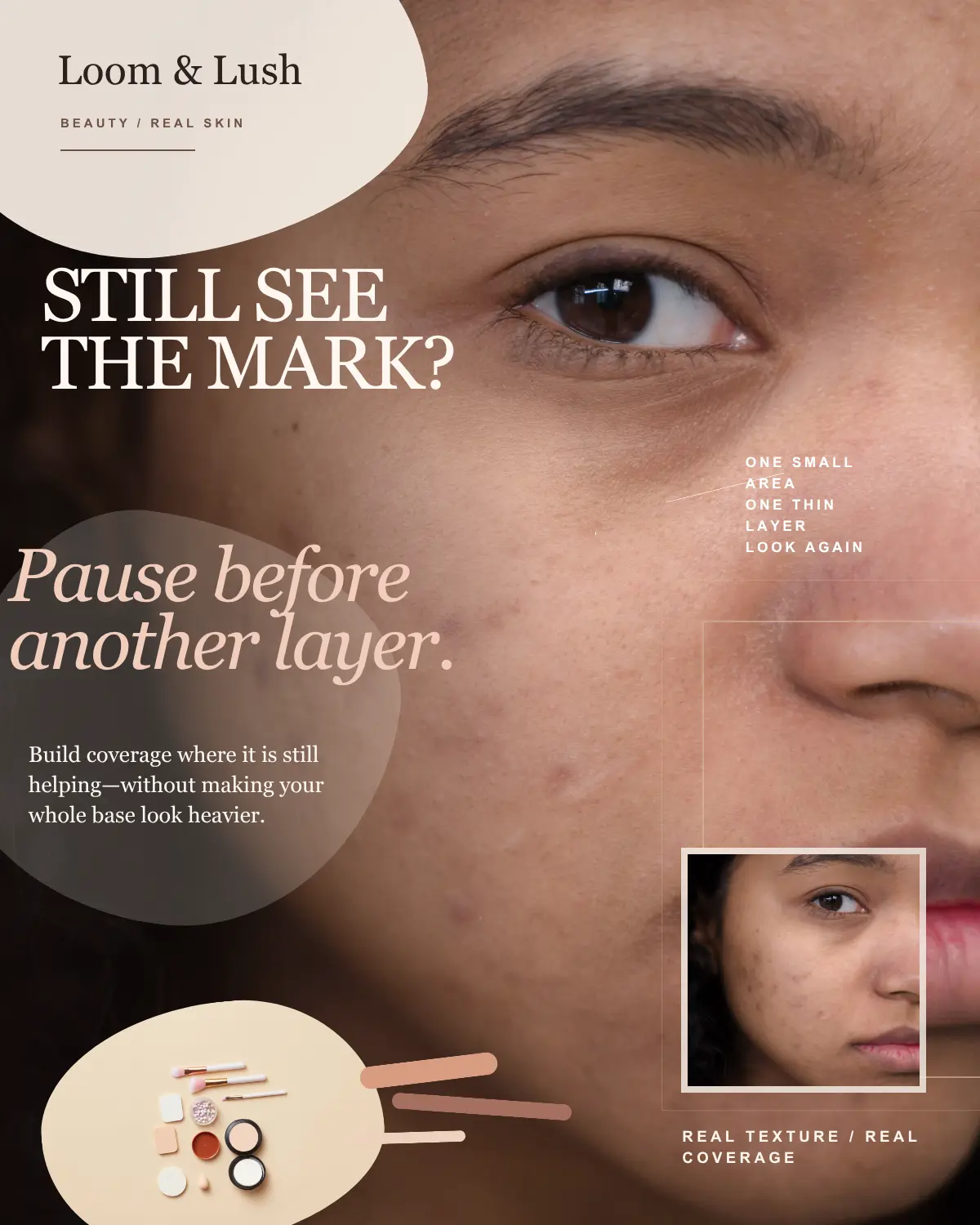
After a light layer of foundation, most of your skin looks good. But if you can still see a mark on your cheek, you might add more foundation over that spot, then go in with concealer. read this for clarifies how to cover acne marks
The mark may look a little less noticeable, but now that area looks heavier than the rest of your face. That’s the problem use less and you can still see the mark use more and you start to see the makeup.
So before adding another layer, take a second to look Is it still covering the mark, or are you just adding more makeup ,Those aren’t the same thing.
First, What Are You Actually Trying to Cover?
After a breakout, it’s easy to call every mark a scar. But the a flat pink, red, or brown mark may just be a change in color. An actual scar can look like a small dip in the skin or a raised area.
That difference matters is when you’re doing your makeup. If the problem is color, foundation, concealer, or a corrector can help bring it closer to your skin tone.
But if what you’re seeing is depth or texture, adding more product won’t make the skin look flat. You may be able to cover the color, but when light hits the area, the dip or bump can still show. An active spot can have both color and a bump.
So if you can still see the mark, then don’t automatically keep adding more coverage. The color may already be covered, and what you’re noticing now could be the shape of the skin.
If it’s the shape you can see, adding more pigment won’t make it disappear. It will only make the makeup look heavier.
There’s a Point Where Another Layer Stops Helping
Say you have a dark mark on your cheek. The first layer of concealer takes most of it down. A second thin layer covers a little more. By the third, the mark barely looks any different, but now you can see the concealer sitting on your skin.
That’s a good place to stop and ask Did that last layer actually make the mark look better? If yes, another very thin layer might help. If the mark looks the same and only the makeup looks thicker, adding more coverage probably won’t change much.
This is easier to notice with pitted or indented marks. and Even after the color is covered, you may still see the dip. Another layer of concealer can not flatten it. The makeup hasn’t failed it has already covered the part it can the color.
You Don’t Need the Same Coverage Everywhere
It’s easy to say, “Just wear less makeup.” But if a dark mark or redness bothers you, there’s nothing wrong with that covering it. You don’t have to go for a bare-skin look just because that’s what’s trending.
The point isn’t to use less makeup. Not every part of your face needs the same amount of coverage. A thin layer might be enough in some areas. And a stubborn mark may need a little more concealer.
One dark mark might need full coverage, but your forehead and temples may not. Put the same amount of product everywhere and the whole base can start to look heavy. The extra coverage isn’t necessarily the problem. Using it where you don’t need it is.
Corrector Should Save You a Layer, Not Add One
Corrector is there to make concealer’s job easier, not to give you another layer of makeup.
A little muted green can help with redness. For dark marks, peach or orange may work better, for depending on your skin tone and the color of the mark. But if you can clearly see the corrector on your skin, you’ll only need more foundation or concealer to cover it.
If a small amount of concealer covers the mark after corrector, that’s enough. If you need another layer just to hide the corrector itself, you probably used too much.
Step Back Before Deciding You Need More
Once the mark is mostly covered, don’t go straight in with another layer. Step back from the mirror and look at your whole face. When you’re a few inches from the mirror staring at one spot, it can seem much more noticeable than it really is. Finish the rest of your makeup and look again from a normal distance. You may find that the mark doesn’t stand out as much as you thought.
This is especially useful if you tend to keep fixing the same spot until the makeup there looks heavier than the skin around it. Leave it alone for a bit, and finish everything else, then come back to it. If it still bothers you, add a little more coverage.
The same thing can happen with lipstick. then Before adding more color, you look at the whole makeup look first. It can keep the shade from getting heavier than you wanted. We use a similar gradual approach in our guide to creating a blurred lip with lipstick you already own when you want a softer finish.
Try This on One Spot Before You Change Your Whole Routine
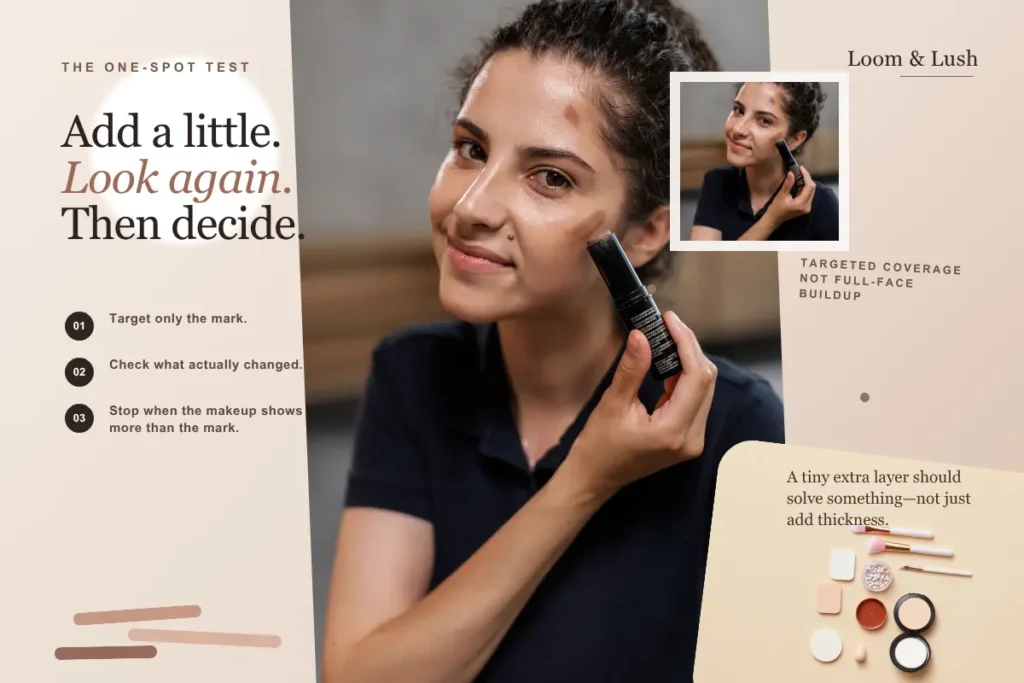
Next time a mark isn’t covered as much as you want, don’t change everything from primer to powder. Focus on that one spot. Do your base the way you normally would, then add a little concealer over the mark. See how much the color fades. If you still want more coverage, add another thin layer. Then look at the makeup too, not just the mark.
Did that layer make the mark less visible, or did it make the makeup more visible?
If the mark is still getting lighter, keep building slowly. If the color barely changes but the area starts to look thick, stop there. If you can still see discoloration, the shade match or corrector may be the issue. If the concealer itself looks heavy, look at how much you’re using or the formula. And if the color is covered but you can still see a dip or raised area, more foundation won’t change that.
With an active spot, then be a little more careful about piling on layers. The more product you add over irritated skin, the harder it can be to blend.
Use as much coverage as you want where you need it. if Your darkest mark may need more the product, but that doesn’t mean the rest of your face does. Keep the extra coverage where it’s actually helping, and before adding another layer, look at what the last one did.
Once the makeup starts showing more than it hides the mark, that’s where you stop.