
You pull a sweater out of the drawer and notice those little balls of fuzz under the arms and along the sides. The fit is still good, and you still like the color. But the pilling makes it look older than it really is, so back in the drawer it goes. If you’re wondering how to remove pilling from sweaters, start by checking whether those little bobbles are attached pills or loose lint.
Before giving up on it, check the fabric itself. If the knit is still in good shape and the main problem is just pills sitting on the surface, carefully removing them can make the sweater look much better. On the right knit, a fabric shaver can help too. But every a fabric shaver can’t fix every kind of wear. If the sweater is already thin or weak in places, shaving it again and again just to make it look smooth can end up doing more damage.
This post contains affiliate links. We may earn a commission if you buy through them. This guide draws on manufacturer instructions and garment-care guidance; we have not personally tested the featured shaver.
Check what’s actually on the sweater
Pills are those small balls of tangled fibres that form on a sweater. In the UK, you’ll also hear them called bobbles, and a fabric shaver may be called a debobbler. Lint or loose fibres sitting on the surface are different. A lint roller or clothes brush may be all you need for those.
Before using a fabric shaver, take a quick look at the sweater. Check whether the fabric around the pills has become thin, whether there are any holes, or if any threads are sticking out. If you spot any of those, it’s better not to shave that area. A loose thread can get caught in the shaver and damage the sweater.
Some knits are naturally a little fuzzy. That may be part of the sweater’s original texture rather than pilling. Shaving that fuzz away can change the finish of the knit. but If you’re not sure what you’re looking at, check the care instructions first.
It’s also worth asking whether you’d actually wear the sweater again once the pills are gone. If it still fits well, you like wearing it, and pilling is the only thing putting you off, cleaning it up can be worth it. But if you no longer like the fit or the cuffs have stretched out, removing the pills probably won’t make you reach for it again.
Why it happens, even on a sweater you like
Pills form when loose fibres rub together and get tangled. Your arms rubbing against the sides of a sweater can cause it, or a bag brushing against the same spot again and again. Woolmark also notes that pilling depends on several different factors, so there isn’t one reason it happens to every sweater.
It can be especially annoying when a sweater you haven’t worn much starts pilling. But pilling on its own doesn’t necessarily mean the sweater is poor quality or that you washed it wrong. If it’s happening a lot on a fairly new sweater, take a photo and contact the retailer before you shave anything off.
You also don’t need to wait until the whole sweater is covered in pills. If it’s just a small area on a sleeve or along the side that’s bothering you, clean up that spot. There’s no need to shave the entire sweater when the rest of it still looks fine.
How to Remove Pilling from Sweaters with a Fabric Shaver
A fabric shaver cuts off the pills sitting on the surface and collects them. That’s all it does. It won’t fix holes, loose fibres, or cuffs that have stretched out.
If you already have a fabric shaver that’s suitable for knits, use it according to the instructions. Some brands recommend a sweater comb instead. You don’t need to buy both just to deal with one sweater.
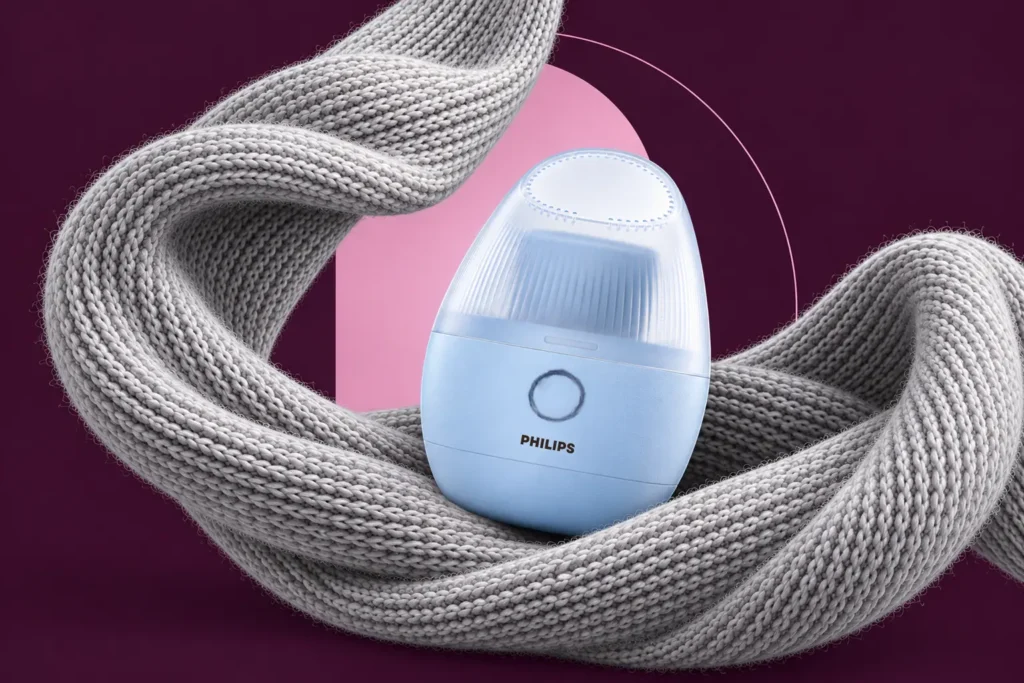
One option to consider is the Philips 1000 Series Fabric Shaver. According to Philips, it has a protective cap for delicate fabrics, a removable lint collector, and a stainless steel blade for removing pills. It runs on two AA batteries, which aren’t included.
The protective cap can help reduce the chance of snagging more delicate materials, and the collector comes off easily when you need to empty it. It isn’t rechargeable, though. If you specifically want a model you can charge, this one won’t be a good fit.
Check the model number before ordering. Similar-looking versions can have different power sources or accessories. If you’re buying from the UK or Canada, check local availability and delivery details as well.
Start with a small patch
Take the sweater off and lay it flat before you start. Shaving it while you’re wearing it makes it harder to see the fabric properly around folds.
- Make sure the sweater is dry. Smooth out any folds, but don’t stretch the knit.
- The Philips 1000 Series has one speed. Use light pressure and let the shaver do the work.
- Test a small area first. Stay away from seams, buttons, and loose threads.
- If the pills come off and the fabric still looks good, continue in small sections. Avoid going over the same spot again and again.
- Stop if the fabric catches or the texture starts to change.
Even with a protective cap, don’t assume it’s safe for every delicate fabric, including cashmere. If you’re unsure, check the sweater’s care instructions first.
If it stops picking up pills, don’t press harder
If the shaver starts running slowly, don’t assume the batteries need replacing straight away. Philips says a full collector can also slow it down. Switch it off and empty the collector first.
Remove the batteries before cleaning the shaving head. Use a small brush to clear away any fuzz left inside. The blades are sharp, so don’t try to pull fibres out with your fingers. and now If cleaning it doesn’t solve the problem, don’t press harder against the sweater. Check the Philips instructions instead.
Every so often, stop and look at the whole sweater. When you’re working up close, even tiny pills can start to stand out. Once you’re actually wearing the sweater, you may not notice them at all.
Keep it wearable without making care a chore
Pills can come back, but that doesn’t mean you need to shave your sweater after every wash. Just deal with them when they start to bother you. When it’s time to wash the sweater, follow the care label. Woolmark recommends turning wool garments inside out before washing and avoiding fabric softener.
This is also something you can do during a seasonal wardrobe reset. You don’t need to work through the whole drawer at once. Start with one sweater you actually want to wear soon.
And if the sweater looks fine but you still keep putting it back in the drawer, pilling may not be the real problem. You might just be tired of wearing it the same way. In that the case, see what to do when you’re bored with clothes you still like.
Once you’ve removed the pills, put the sweater on and see how it looks. If it looks good when you’re wearing it, there’s no need to keep chasing every tiny imperfection.