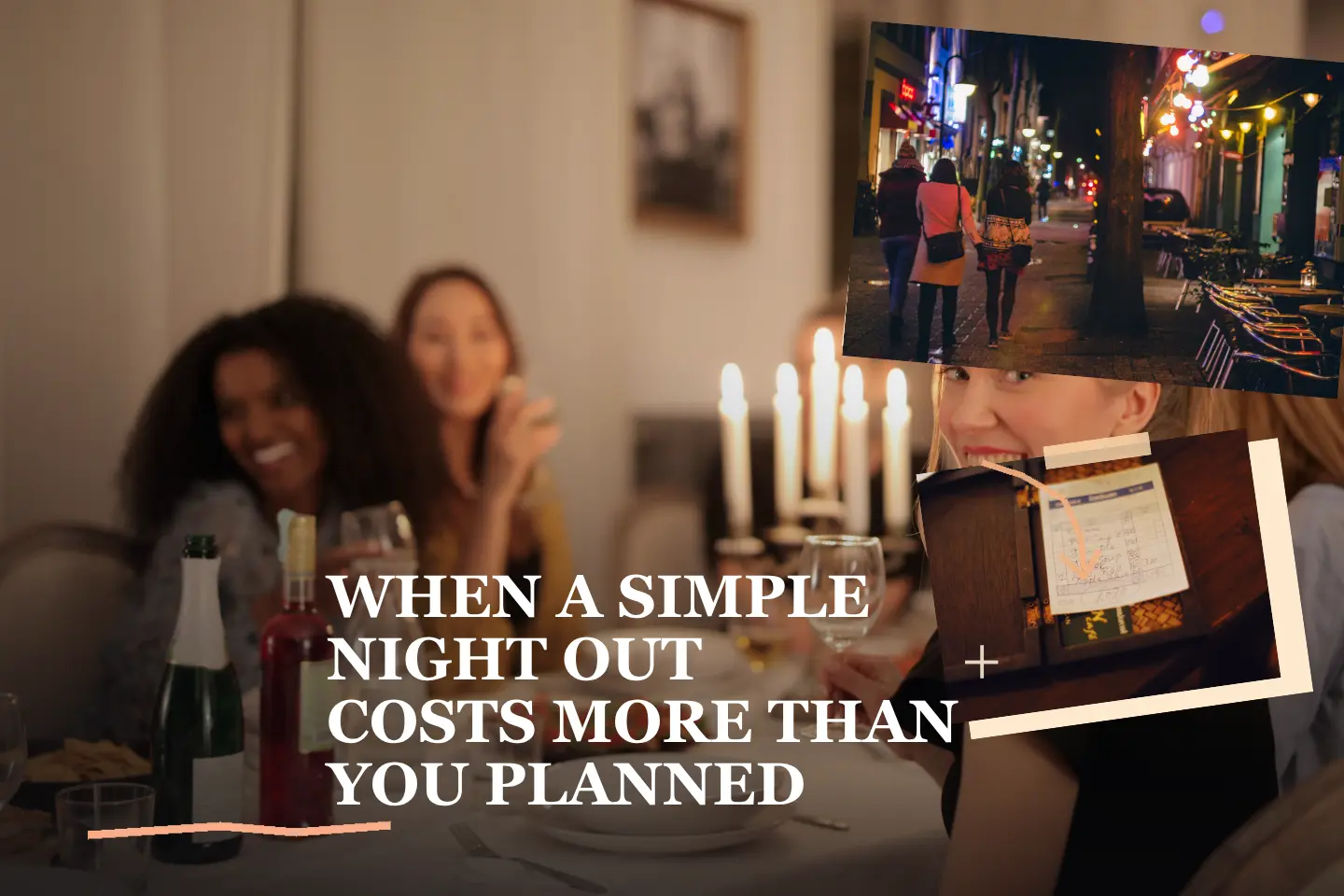
You get home after dinner with your friends, still thinking about something that made everyone laugh. The food was good, the conversation was even better, and you’re already looking forward to seeing them again.
Then you check what you spent. It’s quite a bit more than the amount you had in mind when you agreed to dinner. You look through the transactions, trying to remember where it all went. The meal itself wasn’t outrageously expensive, and you don’t remember ordering anything particularly extravagant.
The annoying part is that you had a really good time. You wouldn’t have wanted to miss the evening, but you also hadn’t planned on spending quite so much. Thinking back over the night, you start noticing how many little decisions happened between saying yes to dinner and finally getting home.
It Started With Just Dinner
A friend sends a message suggesting dinner on Saturday. You’ve all been meaning to catch up, and finding an evening that works for everyone feels like an achievement on its own. You say yes because you want to see them, probably picturing somewhere familiar where you can have a nice meal and spend a few hours together.
But someone else might be imagining a new restaurant they’ve been wanting to try. Another friend could already be thinking about drinks afterwards. Nobody is necessarily being unreasonable. You just haven’t all pictured the same evening.
By the time someone suggests a restaurant and everyone starts talking about booking a table, the plan feels settled. If the place turns out to be more expensive than you expected, asking to go somewhere else can suddenly feel awkward, especially when everyone else sounds excited.
Money isn’t always an easy subject to bring up with friends, even close ones. In a 2026 CFP Board survey of US adults aged 25 to 64, 67% said they had turned down at least one social event in the previous two years primarily because of cost. More than half of those who declined hadn’t told their loved ones that money was the reason.
You don’t have to explain your bank balance to suggest a different restaurant, though. Asking, “Would everyone be happy with somewhere a little more casual?” gives the group another option before anyone books. They might be perfectly happy to change the plan, or they might have their hearts set on that particular place.
A birthday or special celebration can make the decision a little different, too. You may want to spend more for the occasion, or perhaps you’d rather celebrate with your friend another day. Either way, it’s nicer to know what the evening is likely to involve before committing to it.
The Extras Seem Small When You’re Enjoying Yourself
Once you’re sitting at the table, you’re probably more interested in catching up than keeping track of every little expense.
A friend suggests ordering a starter for everyone to share. It sounds good, so you agree. Someone recommends a drink you’ve never tried, and you decide to have one. Later, when the plates are cleared, the dessert menu makes its way around the table.
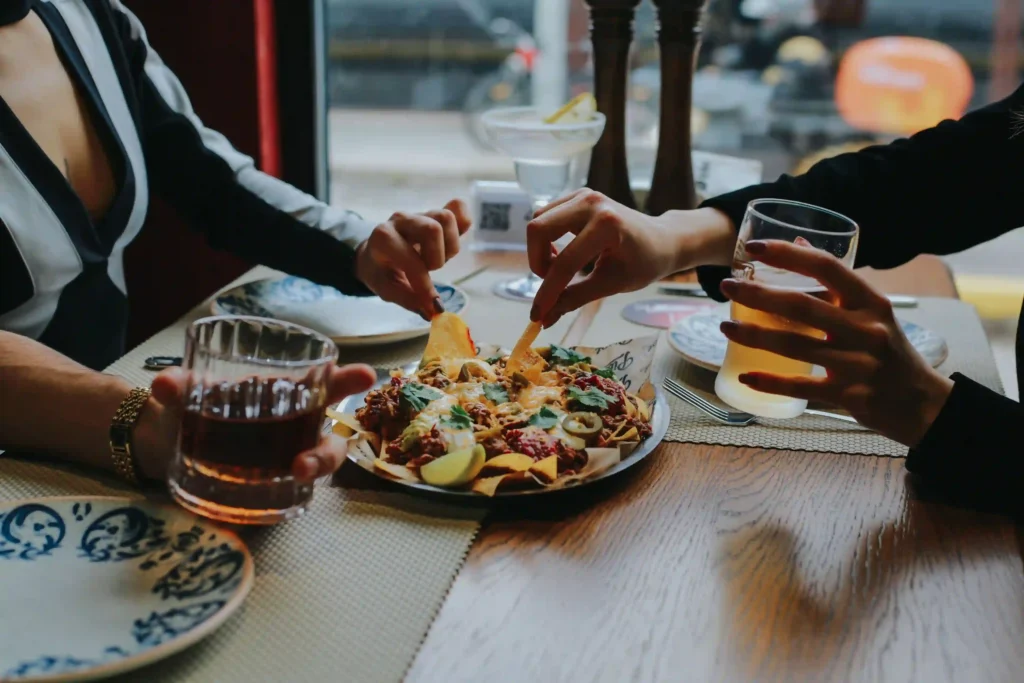
You might enjoy every single thing you ordered. Trying a dish because a friend recommended it, or sharing dessert when nobody is quite ready to leave, can be part of what makes the evening enjoyable.
But think about what happens when someone suggests another round. You’re happy with the drink you’ve already had, and you weren’t planning on another. Still, the conversation is going well, everyone seems to be ordering, and saying yes feels like the natural thing to do.
Maybe you really do want another drink. Or maybe you’d rather stay and keep talking without ordering one.
Shared orders bring another small complication. You might happily agree to split the starter, but that doesn’t necessarily mean you want to contribute to the bottle of wine someone orders later. Mentioning that while everyone is ordering is usually easier than trying to work it out once the bill arrives.
None of these purchases has to be particularly expensive on its own. It’s when they start adding up alongside the meal, and anything you decide to do afterwards, that the total can become a surprise.
Then Someone Suggests Splitting the Bill
The bill arrives while everyone is still chatting, and someone suggests splitting it equally. It’s convenient, especially when everyone has ordered similar things or agreed to share most of the meal. Some groups do it all the time and are perfectly happy with the arrangement.
How a group decides to pay can affect spending, too. A 2004 study published in The Economic Journal found that participants consumed more when the bill was shared among the group than when each person paid individually. That doesn’t tell us anything about your friends’ intentions, but it does show that payment arrangements can influence what people order.
But imagine you’ve had your main course, a drink, and your share of the starter, while a few others have ordered several drinks and more food. When you look at the amount you’re being asked to pay, it’s noticeably higher than the cost of what you had.
Everyone else might already be getting their cards out, and you don’t particularly want to turn the end of a lovely dinner into a discussion about money.

In everyday situations, friends may simply be used to different ways of splitting a bill. If you haven’t agreed to divide everything equally, there’s nothing unreasonable about asking to pay for your own order and your share of the food you had together.
You don’t need to make a speech about fairness. Something like, “Would you mind if I just paid for my meal and my share of the starter? I didn’t have any of the wine,” explains what you mean without making a big deal of it.
If the restaurant can’t separate the bill, one person might pay and have everyone send their agreed share, accounting for any tax, tip or service charge that applies. And if the group agreed to an equal split before ordering, it’s only fair to acknowledge that arrangement rather than assume it can be changed at the last minute.
Of course, you could also look at the bill and find that everything is exactly what you expected. You pay your share, finish the conversation, and think the evening is coming to an end. Then someone suggests going somewhere else.
When Dinner Turns Into the Rest of the Night
Nobody seems ready to go home. There’s a bar around the corner someone wants to try, or a place nearby that does great desserts. You’ve had such a nice time that another hour with everyone sounds tempting.

It’s easy to think about having one more drink without giving much thought to what else staying out longer might change.
For one thing, there’s the journey home. Perhaps you planned to catch a train, but the last one will have gone by the time you leave. Or the second venue is farther away, and the ride you need afterwards costs more than the one you would have booked from the restaurant.
Paying for a suitable, safe way home isn’t the same as buying another optional drink. Sometimes the more expensive journey is the sensible choice, and it’s worth considering that before agreeing to go somewhere else.
If you’re excited about continuing the evening, you can make that decision knowing what comes with it. But if you’ve had enough, telling your friends you’re heading home doesn’t have to be awkward. Just make sure any shared travel plans are sorted before you go.
After all, you might have come out because you wanted dinner and a long conversation with your friends. You don’t have to join every extra activity to enjoy the time you’ve already spent together.
You Can Love the Evening and Still Wish You’d Spent Differently
When you think about the night afterwards, it’s easy to focus on the total and wish you’d spent less. But that doesn’t necessarily mean you’d have wanted the evening itself to be different.
Maybe the restaurant was wonderful, and you’d happily go again. It was the second venue that didn’t add much. Perhaps you loved staying out late, but you’d have chosen somewhere less expensive for dinner if you’d known how the rest of the evening would unfold. Or maybe your own orders were exactly what you wanted, and the unexpected bill split was the part that bothered you.
Those experiences are different, even though they can leave you looking at a similar total the next morning.
There’s also a difference between spending more than you expected and spending money you couldn’t comfortably afford. If the extra amount has left you short of money for an essential payment, that’s a real problem to deal with. Having enjoyed yourself doesn’t make it disappear.
But if you could afford the evening, genuinely wanted what you spent money on, and had a lovely time, going over your original estimate doesn’t automatically make it a mistake. A rare reunion or special celebration might be something you’re happy to spend a little more on.
What matters afterwards is understanding which part you’d actually change. If you loved the restaurant but didn’t care much for the bar, there’s no reason your next dinner has to be cheaper at the expense of the part you enjoyed most.
Making the Next Night Out With Friends Feel More Like Your Kind of Evening
The next time your group chat starts planning dinner, you probably won’t want to turn it into a conversation about everyone’s spending habits. You just want to see your friends and have a good time.
If there’s a restaurant you’ve been excited to try, you might be happy to spend a little more there and head home afterwards. If you’re mainly looking forward to catching up, suggesting somewhere casual might make more sense. And if all you really want is a long chat with one friend, you could invite them over for coffee instead. You can even try making coffee-shop drinks at home together if that sounds fun.
You may also find that the last evening was worth exactly what you spent. Perhaps the only thing you’d change is having a better idea of the full cost before making plans.
Some of the nicest nights with friends involve unexpected conversations, spontaneous decisions, and staying a little longer because nobody wants to leave. You don’t need to plan every moment or turn a good evening into a list of expenses.
Next time someone suggests “just dinner,” you might still say yes straight away. You’ll simply have a better idea of what else the night could involve, and which parts you actually want to be there for.