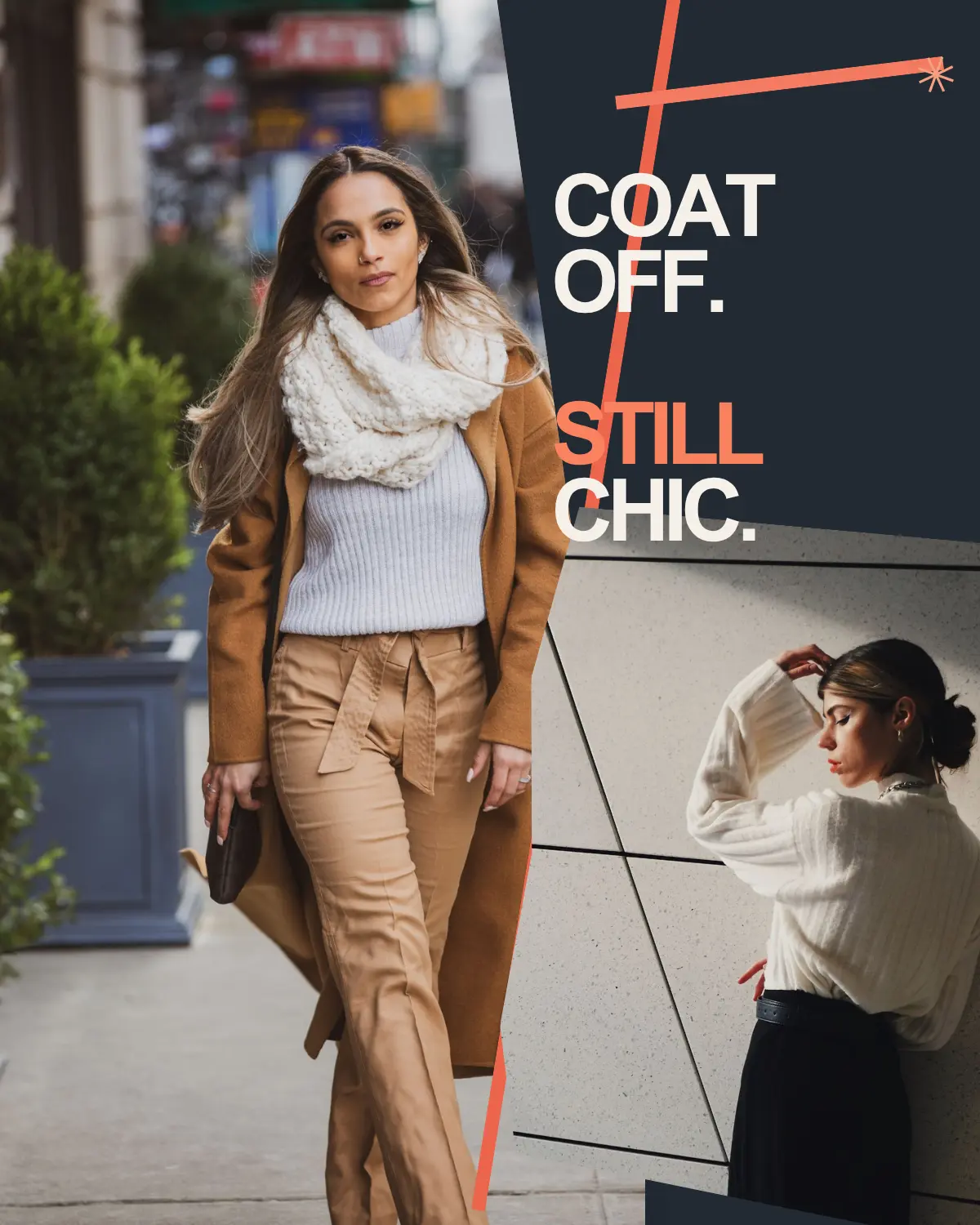
The coat looks great. Your boots make sense with it, the colors feel right, and you’re ready to leave. Then you reach the office or a café, take the coat off, and suddenly the sweater underneath seems a lot plainer than you remembered.
It’s a familiar little winter wardrobe problem, but the answer isn’t necessarily another necklace or a whole new outfit. Sometimes the coat was adding color or shape that you hadn’t noticed.Winter outfits with and without a coat can look different, even when the clothes underneath haven’t changed. Before changing anything, it helps to see what those clothes are doing on their own.
Your Coat Was Doing Some of the Styling
Think about a long camel coat over a cream sweater and dark trousers. The coat adds a warm color, covers the place where the sweater meets the waistband, and gives everything a longer outline. With the coat on, your eye follows those long front edges. Take it away and you notice different details: the sweater hem, the fit of the trousers, and the contrast between the knit and the dark trousers.
A coat’s collar makes a difference, too. A plain crewneck can look more interesting framed by lapels and a scarf than it does when both are gone. That’s not a flaw in the sweater; it’s a change in what you’re seeing.
Of course, sometimes that’s exactly the point. A bold coat can be the star of your outdoor outfit, while a simpler combination feels right for a desk, a café, or a long afternoon indoors. The two looks don’t have to make the same impression.
Try the Coat-Off Check Before Changing Anything
Before leaving home, look at the full outfit with the coat on. Then take it off and give the clothes underneath a proper look. Don’t just ask whether you like them. Work out what, if anything, bothers you.
If the coat supplied the only strong color and you miss it indoors, try a different knit or an existing cardigan in a shade you enjoy. If the neckline suddenly feels bare, compare another neckline before assuming you need jewelry. If the sweater seems too long against your trousers, look at the hem rather than changing the entire outfit.
Comfort deserves its own check. A necklace won’t solve sleeves that feel crowded under a coat. Another cardigan won’t help if the real problem is the thickness of the layers. And a plain outfit doesn’t need a decorative extra just because it looks plain.
Finally, think beyond the mirror. Could you sit through a meeting, have lunch, or spend an afternoon wearing the coat-free version? If the answer is yes, there’s no reason to invent a styling problem.
Three Winter Outfits With and Without a Coat
A Cream Knit and Tailored Trousers Can Be Enough
Start with a cream ribbed sweater, charcoal straight-leg trousers, and black boots. Add a long camel coat for the journey. Outside, the coat supplies much of the color and the long, tailored outline. Inside, you have a softer knit against sharper trousers. It’s a quieter combination, but there’s enough contrast in the textures and shapes for it to stand on its own.
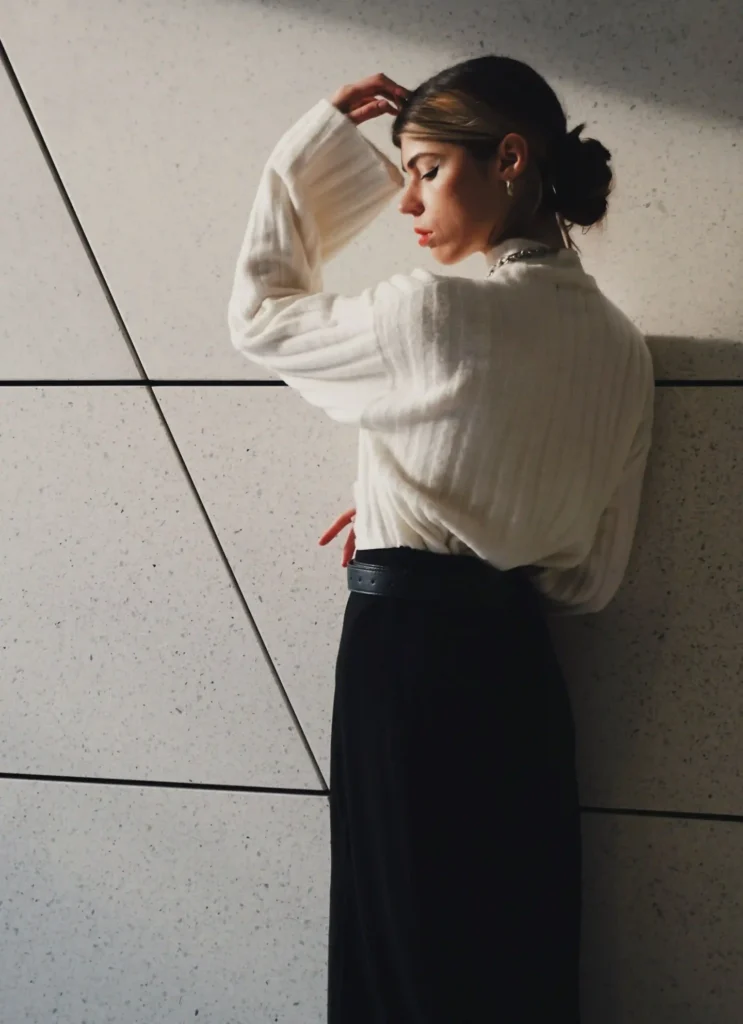
What if it doesn’t feel quite right without the coat? Look first at where the sweater ends. With a longer, loose hem, less of the waistband and upper trouser shape is visible. A shorter knit changes that balance without needing an extra accessory.
If you want a little more definition, try a loose front tuck with a knit thin enough to sit comfortably that way. If the sweater bunches up, skip it. A thick ribbed sweater might look and feel better untucked, or you could try another length from your wardrobe. The point isn’t to make every sweater fitted. It’s to notice whether the hem is actually the detail you want to change.
A striped knit would draw more attention to the sweater indoors, even with the same charcoal trousers and black boots.
Let the Cardigan Become the Main Piece
Now imagine a white long-sleeve top, dark straight-leg jeans, and a burgundy cardigan under a black winter coat. Outside, you may see only a strip of burgundy at the front. Once the coat comes off at a café, the cardigan becomes the main color in the outfit.
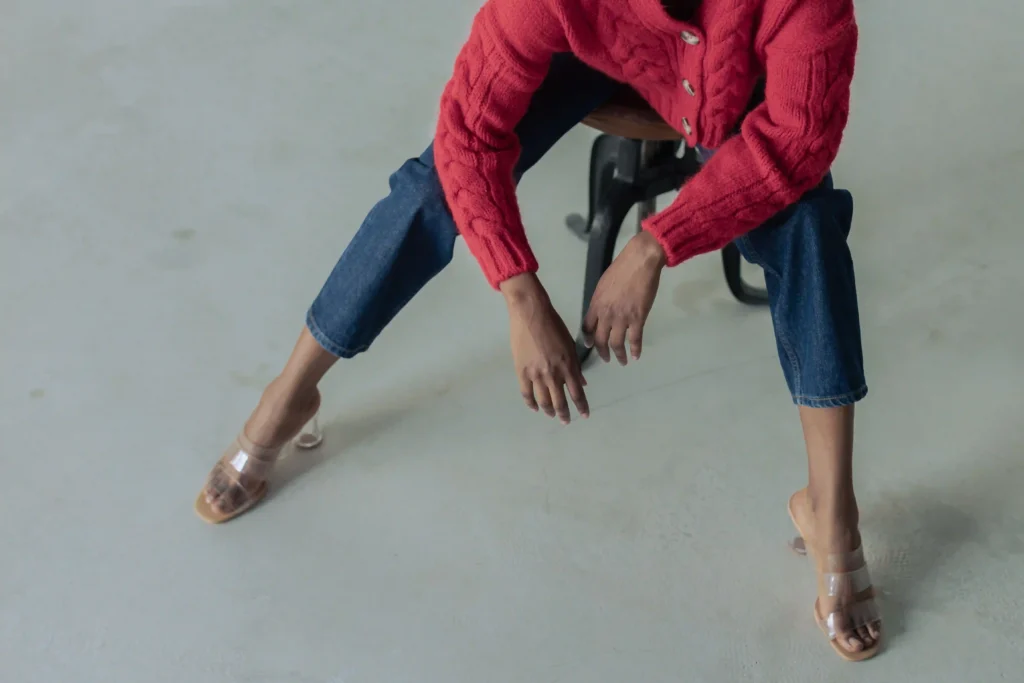
Button it up and the cardigan reads almost like a sweater. Leave it open and the white top breaks up the burgundy, giving the outfit a more relaxed feel. Neither option requires a new piece of clothing. It’s worth deciding which version you actually want to wear indoors, rather than buttoning it a certain way just because that’s how it looked under the coat.
There’s a practical catch. A chunky cardigan can feel uncomfortable beneath fitted coat sleeves, even if it looks lovely on its own. A finer knit—or a coat with a little more room—can make that combination easier to wear.
And this outfit has a third stage. If the room gets warm enough to remove the cardigan, you’re left with the white top and jeans. Make sure you’re happy with that version before you go. You don’t necessarily need a better cardigan; sometimes the base top is the piece worth reconsidering.
With a Midi Skirt, the Coat Can Hide the Details
A plum mockneck sweater, charcoal midi skirt, dark tights, and boots offer a different kind of winter outfit. Under a long coat, the upper half of the skirt is partly hidden. Hang it up, and the way the skirt falls over your tights and boots becomes much easier to see.
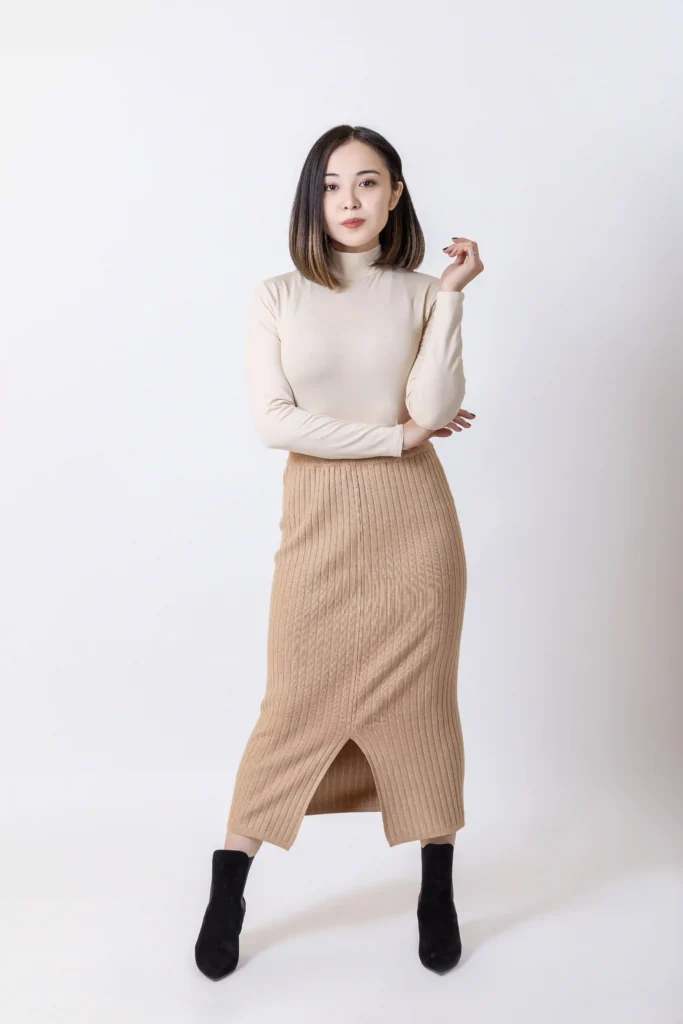
Start where the knit meets the skirt. If a long sweater covers the waistband, you get a softer, more relaxed shape. A slightly shorter sweater shows more of the skirt and changes where the outfit breaks visually. If you prefer an oversized sweater with a flowing skirt, there’s no need to force a tuck.
Now look at the boots. Depending on the skirt’s length, ankle boots can leave a visible section of tights between the hem and the shoe. When the tops of knee-high boots disappear beneath the skirt hem, the lower half looks more continuous. That might feel dressier, or you might prefer the contrast of ankle boots. The weather and how comfortably you can walk in them matter just as much as the picture in the mirror.
The Outfit Still Has to Work Outside the Mirror
The best-looking combination isn’t much use if you’re uncomfortable wearing it. A fine-knit sweater might feel right in a warm restaurant but too light in a chilly office. A cardigan is convenient until you’re carrying it, your scarf, and your coat around all afternoon. It helps to know where those layers will go before you leave.
Your bag can complicate things as well. A shoulder strap that sits comfortably over a sweater may behave differently against bulky outerwear. If that’s familiar, our guide to carrying a handbag with a winter coat looks at the problem in more detail.
And don’t let an outfit idea overrule the actual forecast. A tailored coat may be fine for a dry, mild day; wind, persistent rain, snow, or severe cold may call for insulated or weather-resistant outerwear and footwear with appropriate grip. The National Weather Service recommends layers, protection for exposed skin, and changing out of wet clothes during extreme cold. The outfit underneath can still be something you like, but staying protected comes first.
Next time you’re getting dressed, try the outfit with your coat, then without it. If one version feels off, change the detail that’s causing the problem—not three unrelated things at once. You may find a better pairing among clothes you already own. Or you may discover that the simpler outfit underneath was good all along.