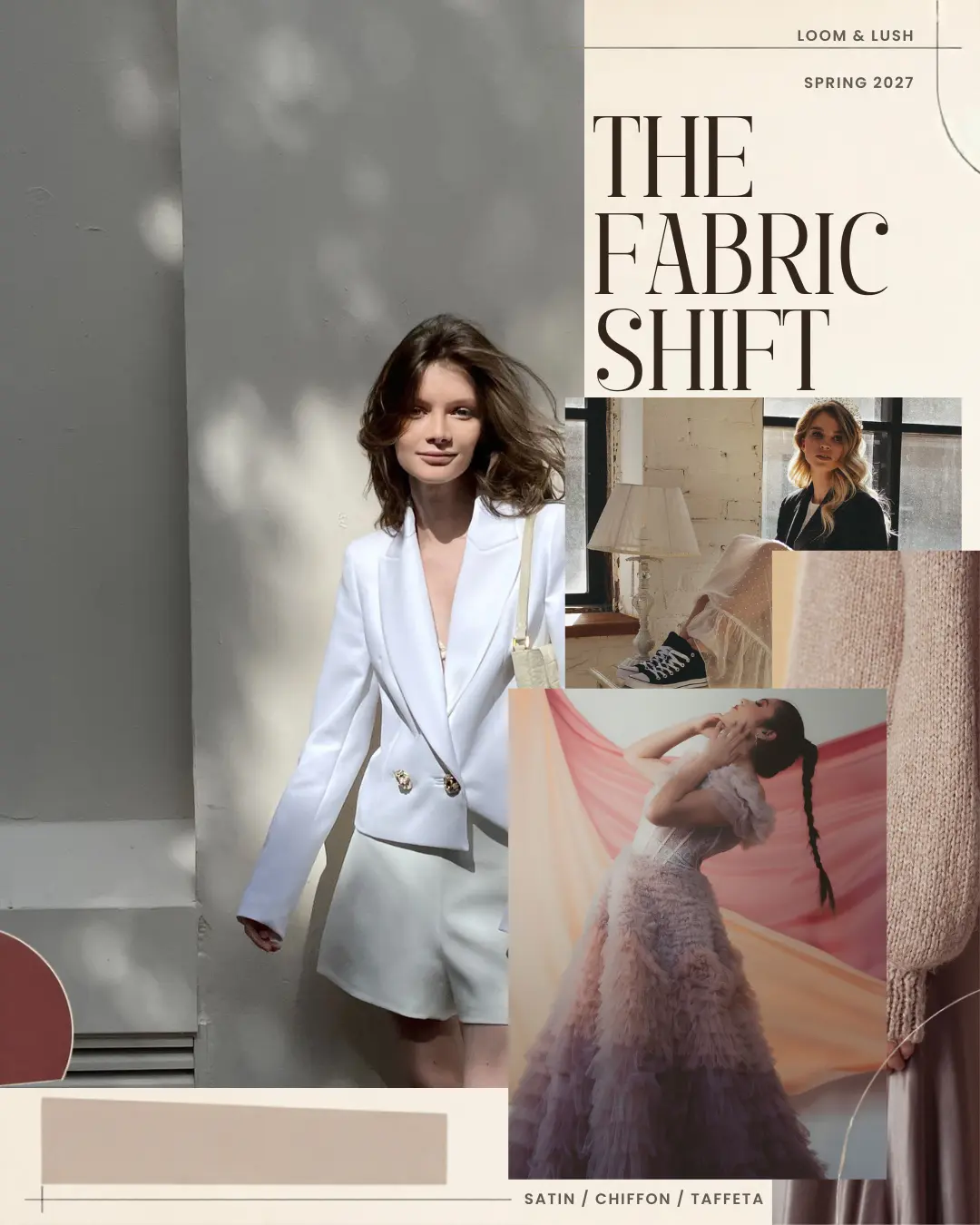
A pair of satin runner shorts seems like a small detail to notice at a fashion show. But at Tove’s Spring 2027 presentation, those shorts said quite a lot about where the collection was going.
Elsewhere, Simone Rocha showed dramatic taffeta cocoons alongside metallic-thread dresses whose shapes could be bent and sculpted. Dior was making blazers out of chiffon. Ferragamo had silk-satin skirts hanging from wool bodices, held in place by belts.
It’s an odd group of garments to put together. That’s exactly why it’s worth looking at them. Satin, chiffon and taffeta aren’t new discoveries. What changes from one collection to another is what designers ask them to do.
Table of Contents : Spring 2027 fashion
Satin doesn’t have to mean an evening dress
At Tove’s Spring 2027 show, Camille Perry and Holly Wright showed an icy-aqua satin minidress, fluid camisoles and satin runner shorts. There were relaxed trousers, low-slung waistbands and bright silk pieces, too.
The shorts are the part I’d come back to. They’re shaped like something you might usually wear with a T-shirt and sneakers. Make them in satin, though, and they no longer read as straightforward sportswear. They still look easygoing, but there’s a dressed-up element without the formality of a long satin gown.
Vogue’s review describes the satin shorts and camisoles as pieces that move between daytime and evening dressing. That feels like a more useful explanation of the design than simply calling satin luxurious. The fabric hasn’t changed the basic identity of the shorts; it’s changed how you might think about wearing them.
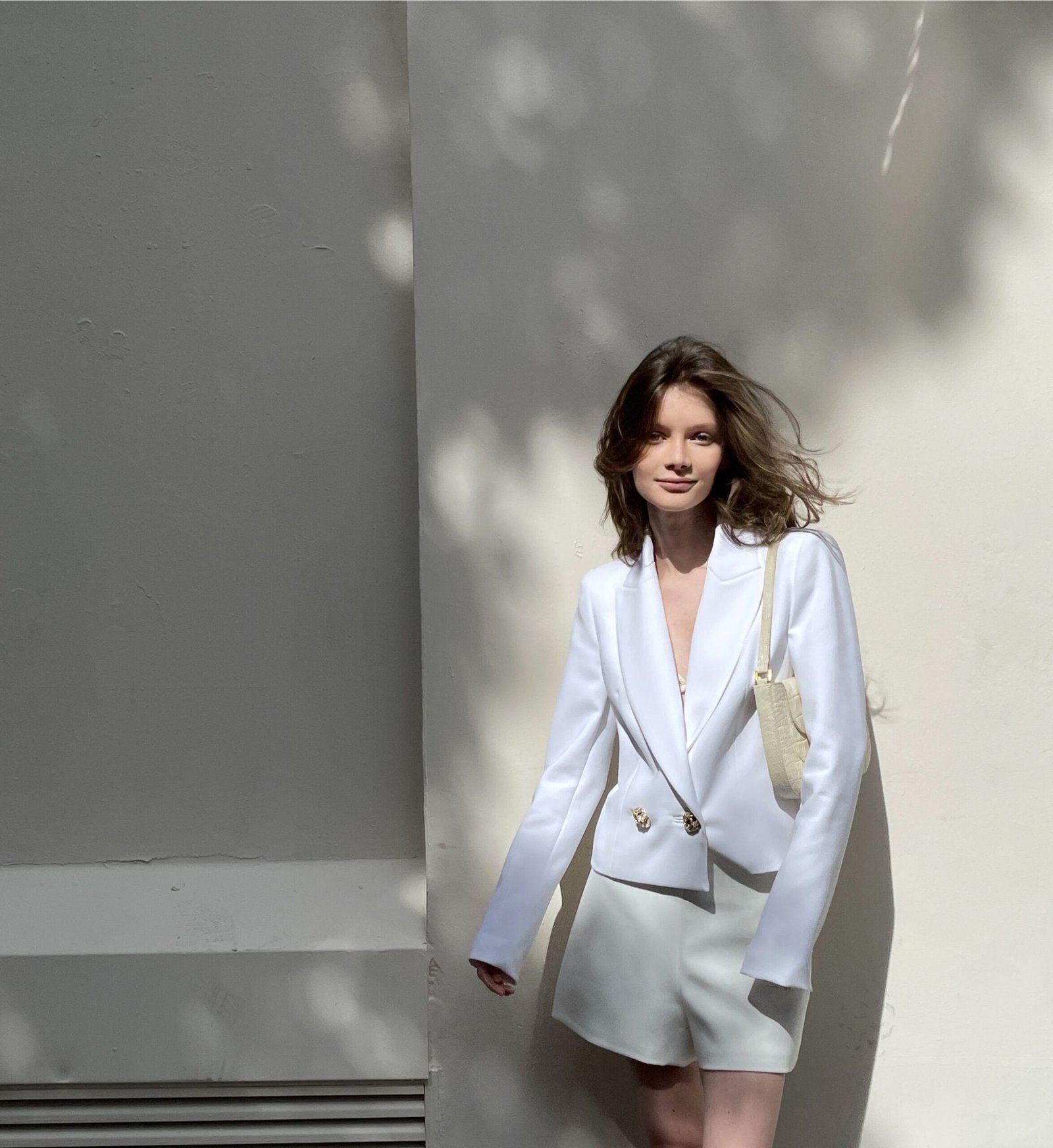
Now look at Ferragamo’s Spring 2027 collection. Maximilian Davis worked with a very different arrangement: silk-satin skirts suspended from strapped wool bodices. Buckled belts, some placed around the bust, helped define the dresses.
Here, the interesting detail isn’t shine. It’s how the skirt connects to the rest of the garment. The wool, belts and satin each have a role in the finished silhouette.
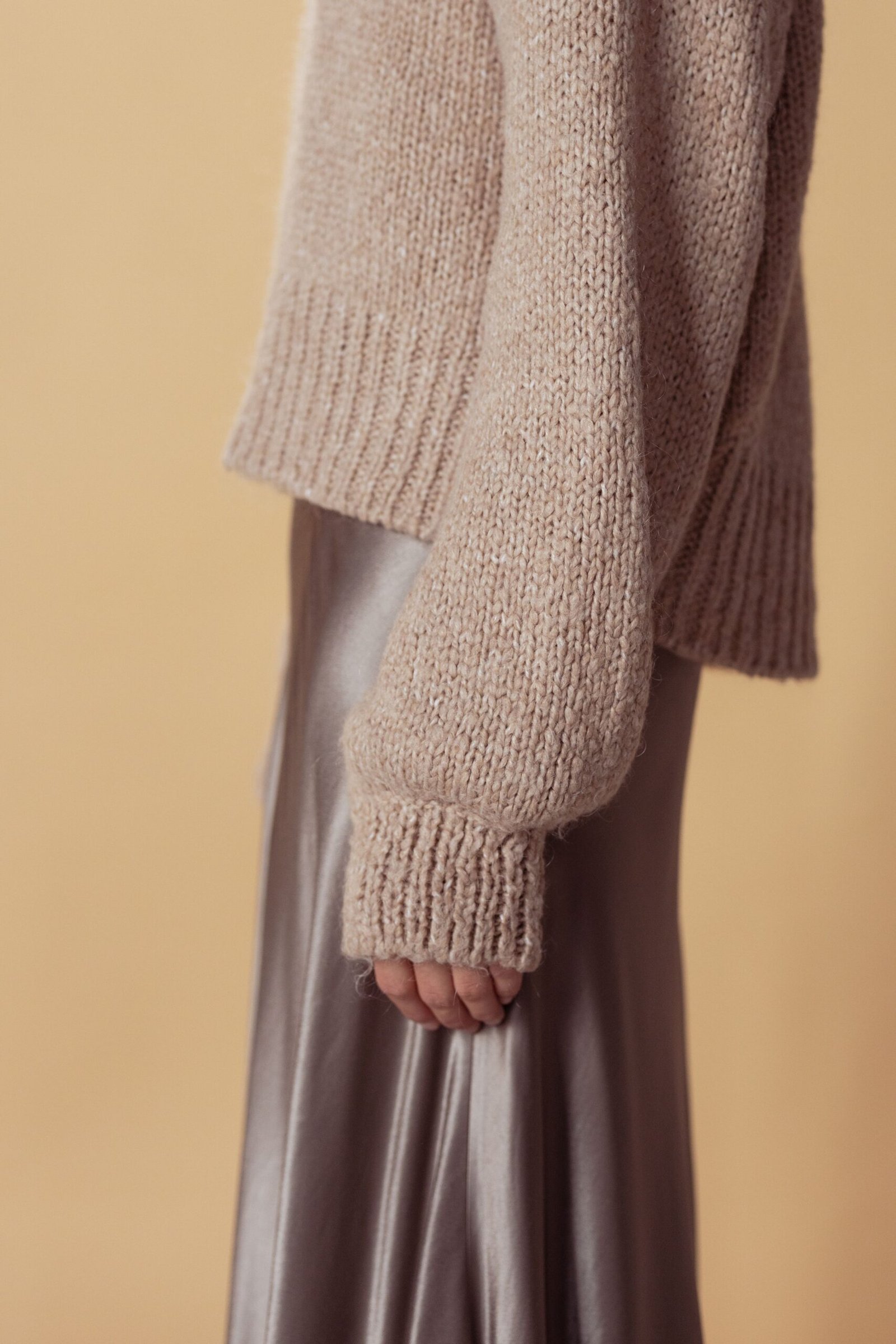
Tove’s satin shorts and Ferragamo’s suspended skirts don’t look as though they belong in the same wardrobe. Yet both show why satin isn’t a complete description of a piece of clothing. A fabric name won’t tell you whether a skirt is softly cut, supported by a bodice or attached to a firm waistband.
And satin doesn’t necessarily mean silk. Satin describes a weave, not a fiber. It can be made from silk, polyester, viscose or other fibers. That’s a detail worth checking when a runway idea eventually turns up on a store’s product page.
Dior’s chiffon blazers are not what you expect
Chiffon usually brings a soft dress or sheer blouse to mind. A blazer? Less so.
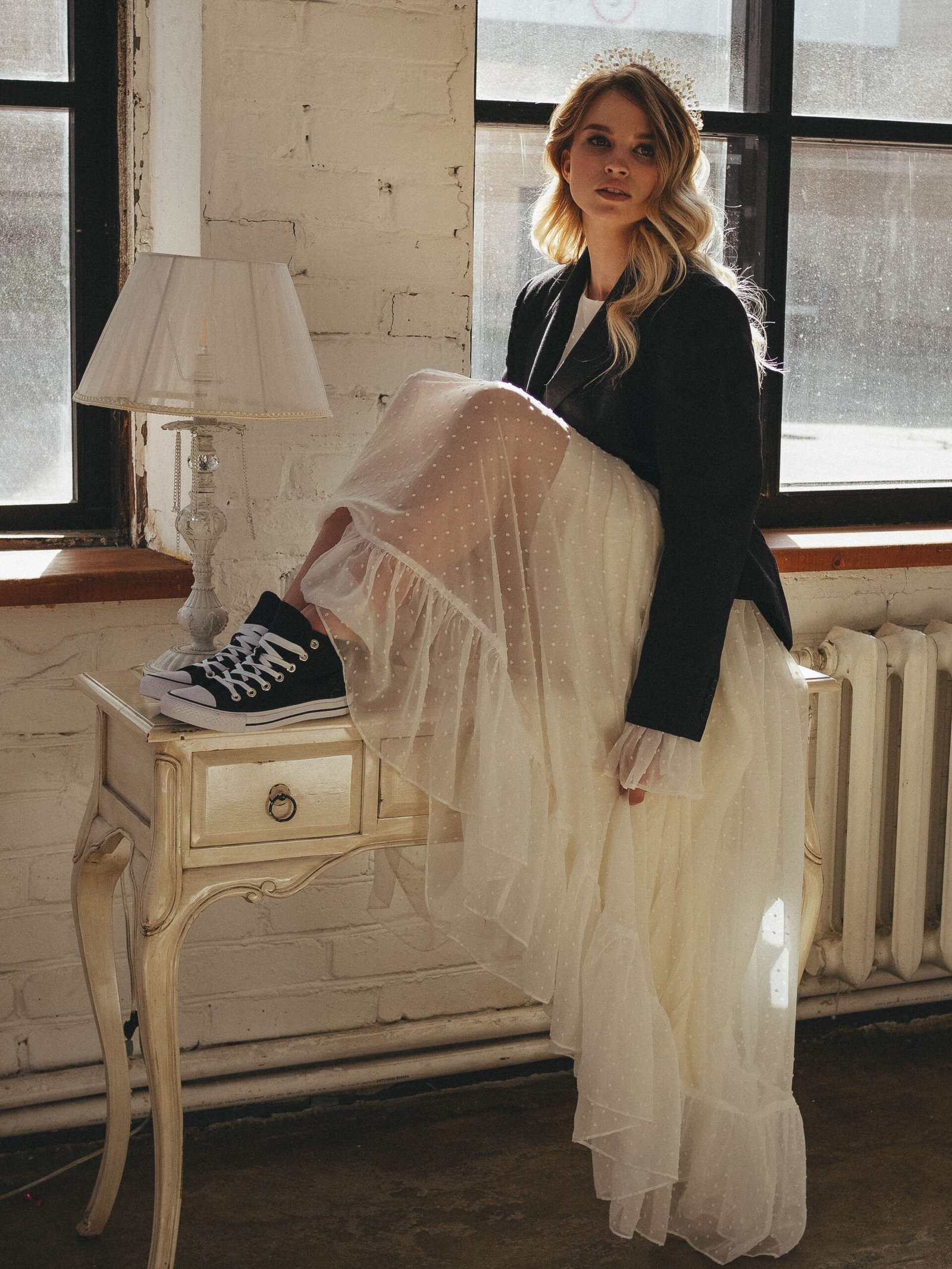
For Dior’s Spring 2027 collection, Jonathan Anderson showed pinstripe and tweed-print chiffon blazers with short, layered, semitransparent circle skirts.
A tweed-print blazer suggests the weight of traditional tailoring, but knowing it’s made from chiffon changes that impression. Rather than abandoning the familiar blazer shape, Dior changed what you expect the jacket to be made of.
The skirts matter here as well. A circle skirt is part of Dior’s long design history, but these sheer layers gave the familiar outline a more delicate appearance. The collection wasn’t just about making things transparent; it was about changing the visual weight we associate with certain clothes.
This wasn’t a sudden invention of light tailoring. Dior’s Summer 2027 show notes connect some of these ideas to earlier collections. The interest is in this particular summer interpretation, not a claim that nobody has ever sewn chiffon into a jacket before.
There is a useful distinction for anyone drawn to a similar blazer in a store. A lightweight-looking outer fabric doesn’t tell you everything about its lining, seams or support. Nor does sheer automatically mean cool to wear in every climate. The finished garment still matters.
Simone Rocha gave taffeta something else to do
Taffeta often makes people think of a skirt that holds its shape. Simone Rocha’s Spring 2027 collection took that familiar idea somewhere less predictable.
Alongside striking taffeta cocoon structures, Rocha showed full-skirted dresses in khaki, lilac and black. As Vogue reported, fine metallic threads in the fabric allowed the shapes to be bent and sculpted.
Imagine adjusting the folds of a skirt rather than accepting one fixed outline. That’s a different idea from simply adding more volume. The material itself becomes part of how the shape can be handled.
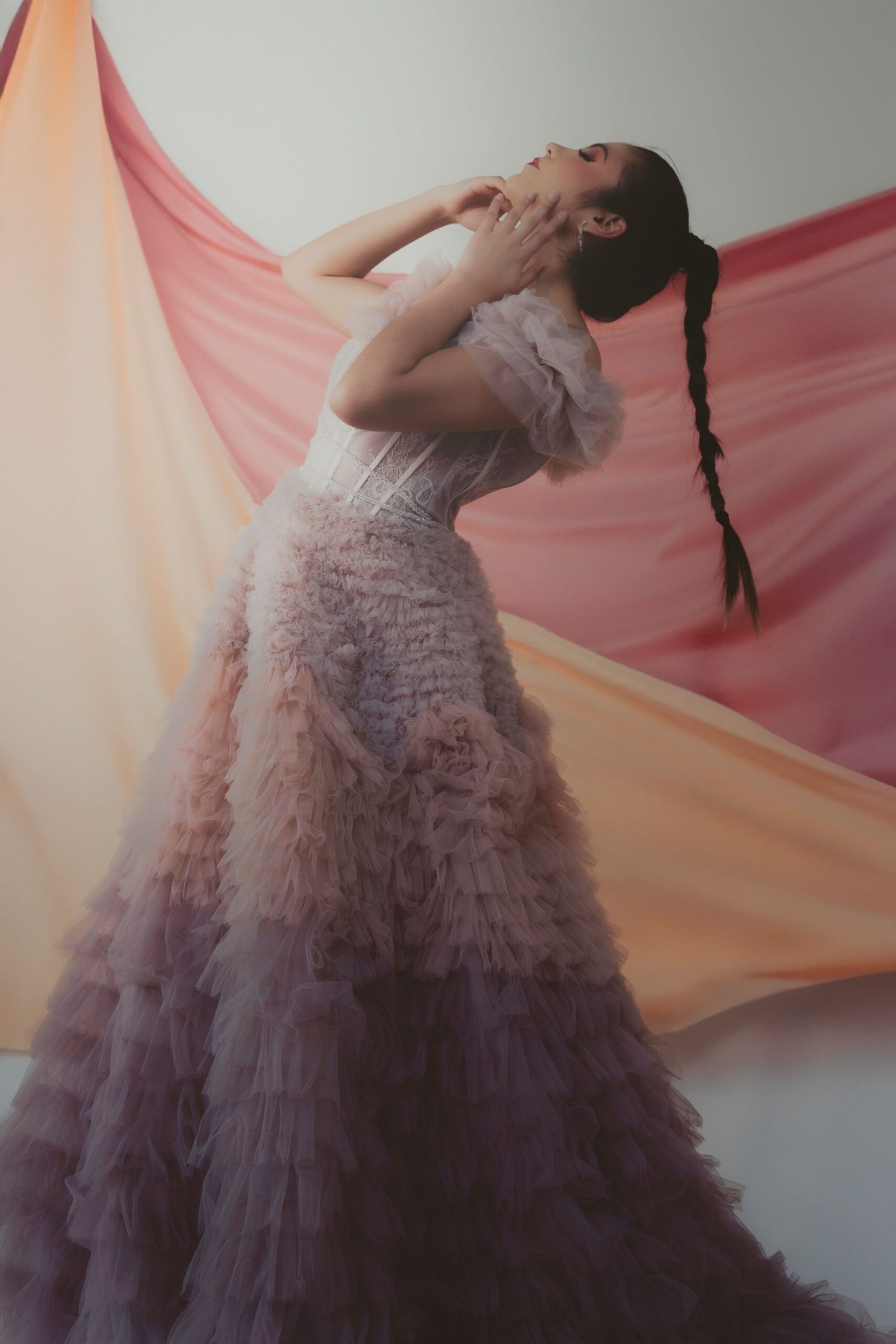
It’s important not to turn this into a claim about every taffeta dress. Rocha’s metallic-thread fabric was a specific development. It doesn’t mean a regular taffeta skirt from a store will respond the same way.
And volume wasn’t new to her work. Rocha’s Spring 2026 womenswear collection already included scalloped taffeta, crinolines and exaggerated skirts. What’s worth noticing in 2027 is the particular manipulation of the metallic-thread dresses, not the arrival of taffeta for the first time.
A head-enveloping cocoon is unlikely to be the next ordinary Saturday outfit. But it makes a point that a photograph of a conventional full skirt might not: some designers are interested not just in how much space a fabric holds, but in whether that shape can be changed.
What to notice beyond the runway
You don’t need to copy these looks to get something out of them.
The Tove shorts suggest how satin can make an otherwise sporty garment feel different. Dior’s blazer shows that a familiar tailored shape can take on another character through a lighter, sheerer material. And Rocha’s skirts draw attention to the way volume is made, rather than volume alone.
If something similar catches your eye while shopping, it’s worth looking past the first fabric word in the description. A satin piece might be silk or polyester. A chiffon dress might be fully lined, partly lined or intentionally sheer. A taffeta skirt’s volume might depend on its cut and inner construction.
None of that makes one fabric better than the others. Nor does a dramatic runway look tell us how a retail version will fit or feel. It simply gives you more to notice than whether the fabric is shiny, floaty or crisp.
What stays with me from these Spring 2027 collections is the distance between the clothes themselves: running shorts, a suspended skirt, a chiffon blazer and a dress you can sculpt. They aren’t competing to be the one defining look of summer. They show how much room there still is to do something unexpected with familiar materials.