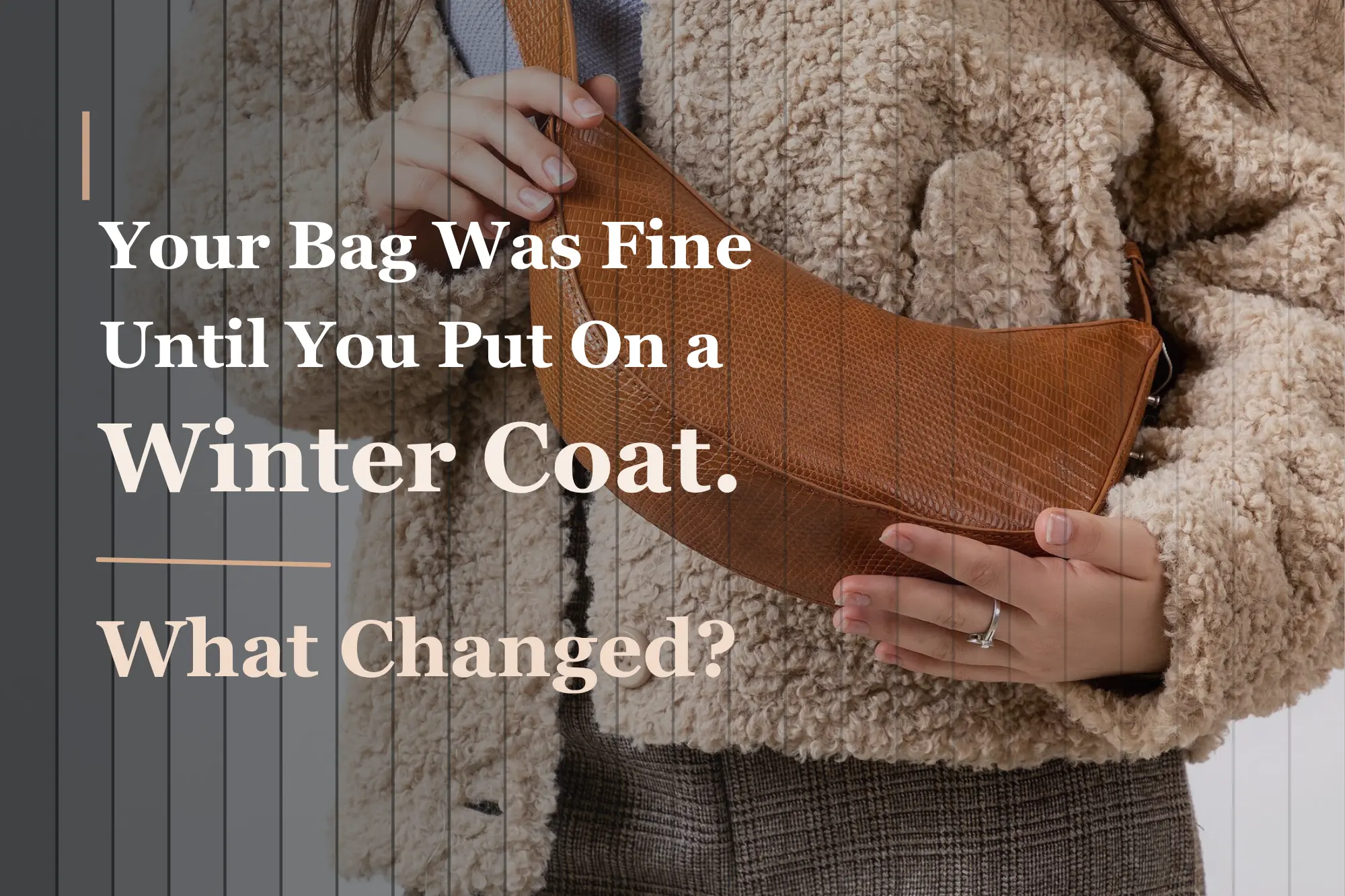
There’s a very specific kind of annoyance that shows up when you put on your proper winter coat and reach for the bag you’ve been carrying for months. The handles don’t quite make it over your shoulder. You give one a little tug, it catches on your sleeve, and suddenly you’re standing by the door rearranging a bag that was perfectly fine yesterday.
Sometimes you manage to get it on, only for the strap to slide down your arm as soon as you walk. Other days, the bag carries just fine, but you catch the whole outfit in the mirror and something looks off. These can feel like versions of the same winter wardrobe problem. They aren’t, and knowing the difference can save you quite a bit of fuss.
This article contains an Amazon affiliate links. As an Amazon Associate, I earn from qualifying purchases.
Table of Contents : handbag with a winter coat
Your Coat Takes Up Space Your Bag Used to Have
A shoulder bag has to fit around more than your shoulder. There’s the sleeve beneath it, the distance between the handles and the top of the bag, and enough space for your arm to move without knocking into the whole thing. A fitted sweater doesn’t take up that much room. A quilted puffer can be a different story.
Even coats that look fairly similar can sit differently at the shoulders. An oversized wool coat, a parka with a substantial hood, and a neat tailored coat don’t give your bag the same shape to rest against. It also matters whether the bag is soft enough to sit close to your side or structured enough to hold its shape under your arm.

One New York commuter described exactly this frustration with her Madewell totes. They were the right size for her commute and easy to wear over her shoulder—until the bulkier winter coats came out. Then she had to carry them on her arm instead.
It’s easy to look at a problem like that and assume you need a bigger bag. But the body of the bag might be perfectly adequate. What isn’t working is the space available for the handles, or where the bag ends up once they’re on.
Getting It Onto Your Shoulder and Keeping It There Are Two Different Things
If your tote handles barely clear your coat, their length is worth paying attention to. Some bags have a generous handle drop—the space between the top of the bag and the inside of a raised handle—while others are designed to sit snugly under your arm. The latter can feel great with a thin top and rather less convenient with a thick sleeve.
Slipping is a separate headache. A strap might go on easily, but slide off as you walk or reach for something. It’s tempting to blame a slippery coat, and the contact between fabric and strap may play a part. So can the shape of the shoulder, where the bag is sitting, and what you’re carrying. Try moving the bag slightly forward or back on your shoulder to see if it stays put any better. If it feels unevenly loaded, rearranging the contents is another simple thing to try.
There’s a useful example in a discussion of the Everlane Studio Bag. One owner found its wide strap more comfortable than the thin strap on another bag, yet said it still slipped when she wore her winter coat. A wider strap isn’t a magic answer to every slipping problem.
Then there’s the bag that fits and stays up, but gets wedged against your elbow. That’s a position problem, not necessarily a strap problem. Giving the bag more room under your arm could help; dropping it too far might make walking or reaching inside less convenient.
The detail to notice is when the trouble starts. Is it a struggle just to put the bag on? Does it move once you get going? Or is the annoying part having to push it aside whenever you need your phone? Each points toward something different.
Crossbody Sounds Easier, Until There’s a Hood Involved
When a shoulder bag keeps slipping, switching to crossbody seems obvious. It can be a good alternative, particularly if you want your hands free for a commute or grocery bags. But a crossbody strap has to travel across everything you’re wearing, and winter adds a few obstacles to that route.
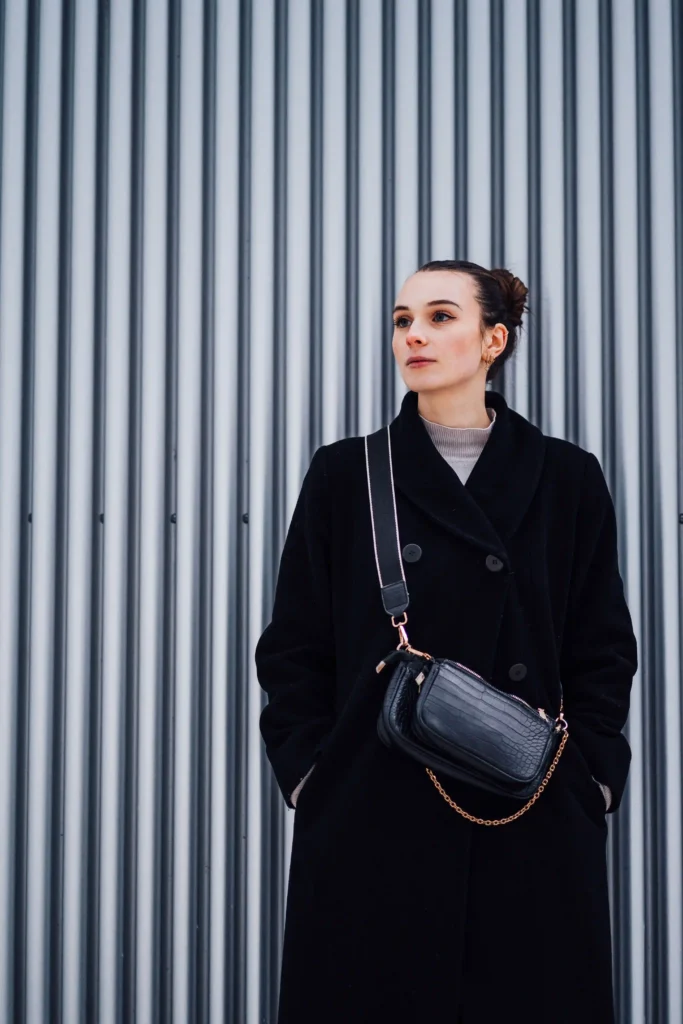
A big parka hood can get caught beneath the strap. Add a scarf and a high collar, and taking the bag off becomes its own little project. In one handbag discussion about cold-weather carrying, a parent who needed her hands free described how frustrating it was to get a crossbody around her coat’s hood. Other readers preferred wearing their bags underneath their coats or using a top handle when it made sense.
One workaround from that discussion is to put your hood up, slip the crossbody on, and lower the hood afterward. If the strap detaches, unclipping one end could be easier than hauling it over your head. Wearing the bag underneath your coat is another option, though you may have to open your coat whenever you need something. And hand-carrying isn’t especially helpful if you’re holding a child’s hand or juggling shopping bags.
Your actual routine matters here. A bag that’s comfortable for the walk outside still needs to be manageable when you step indoors, pull off your coat, or reach for your keys.
And Sometimes It’s Just the Way the Outfit Looks
Of course, sometimes the bag isn’t difficult to carry at all. It just looks a little different once the coat goes on.
A small, polished shoulder bag that looks lovely with jeans and a fitted sweater might feel surprisingly dressy next to a big quilted puffer. Put that same bag with a neat wool coat, and the combination can feel completely different. The contrast between sporty outerwear and a dressier bag might be the part you end up liking most.
The position matters, too. A short-strap bag tucked high under your arm looks different from one hanging lower at your hip, especially when the coat already has plenty of volume. If you can adjust the strap, even a small change in where the bag sits may be enough to make the outfit feel more like you.
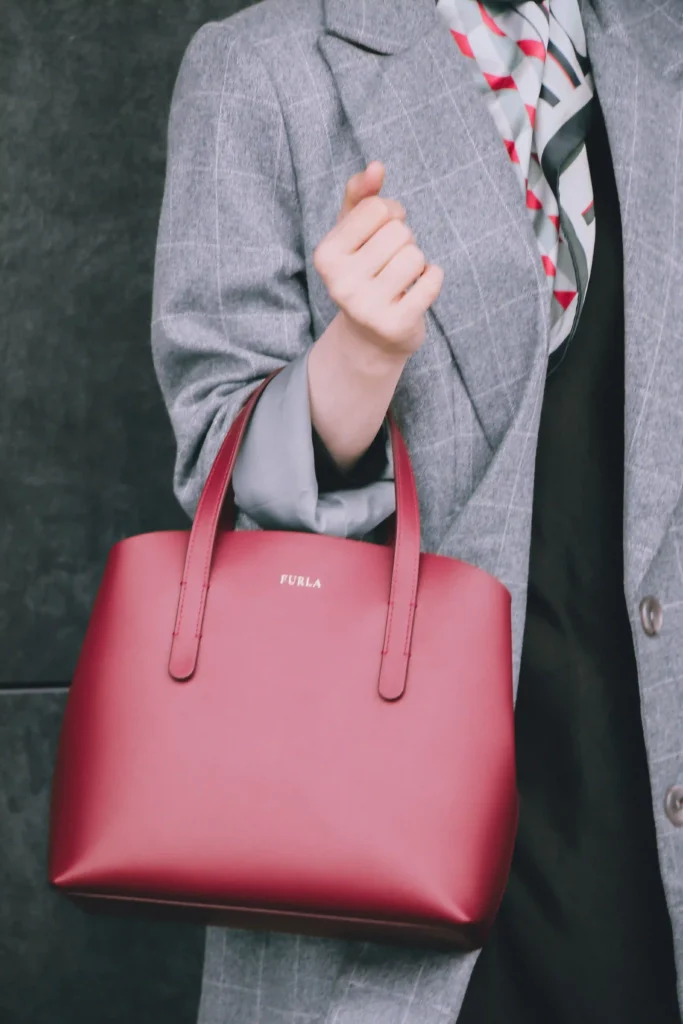
You can see how much the coat and accessories contribute to an outfit in these fall outfit ideas, including a dark peacoat worn with a brown shoulder bag.
Sometimes the look you wanted is simply a different combination of pieces already in your closet.
Before Shopping, See What Your Bag Can Already Do
Before shopping for another handbag, take a look at the one you already own. Does it have a second strap tucked away somewhere? Can you adjust the length? Is there another way to carry it that you normally forget about?
A slightly different strap position might be worth trying if your bag keeps getting caught under your arm. But don’t assume longer automatically means better. You could move the bag away from your sleeve only to find that you don’t particularly like where it hangs, or that reaching into it has become more awkward.
Try the change with the coat you actually wear and the things you normally keep in your bag. Walk around a little. Get your phone out. Check whether the strap stays where you want it when you move.
If your favorite bag has a removable strap that’s simply too short to wear comfortably over your coat, a compatible adjustable replacement strap is another option. Check the clasps, attachment points, length, and whether the hardware is suitable for your bag before buying one. It won’t help a tote with fixed handles, and changing the strap won’t necessarily solve a slipping problem.
If there isn’t a useful adjustment, reach for another bag you already own if it fits more comfortably over your heaviest coat, or save the tricky tote for lighter layers. Carrying it on your forearm might be perfectly practical for a short errand, even if it isn’t how you want to commute.
Your handbag doesn’t need to match every coat perfectly, but it should be easy enough to live with. A bag shouldn’t require an elaborate getting-ready routine just to make it out the door.